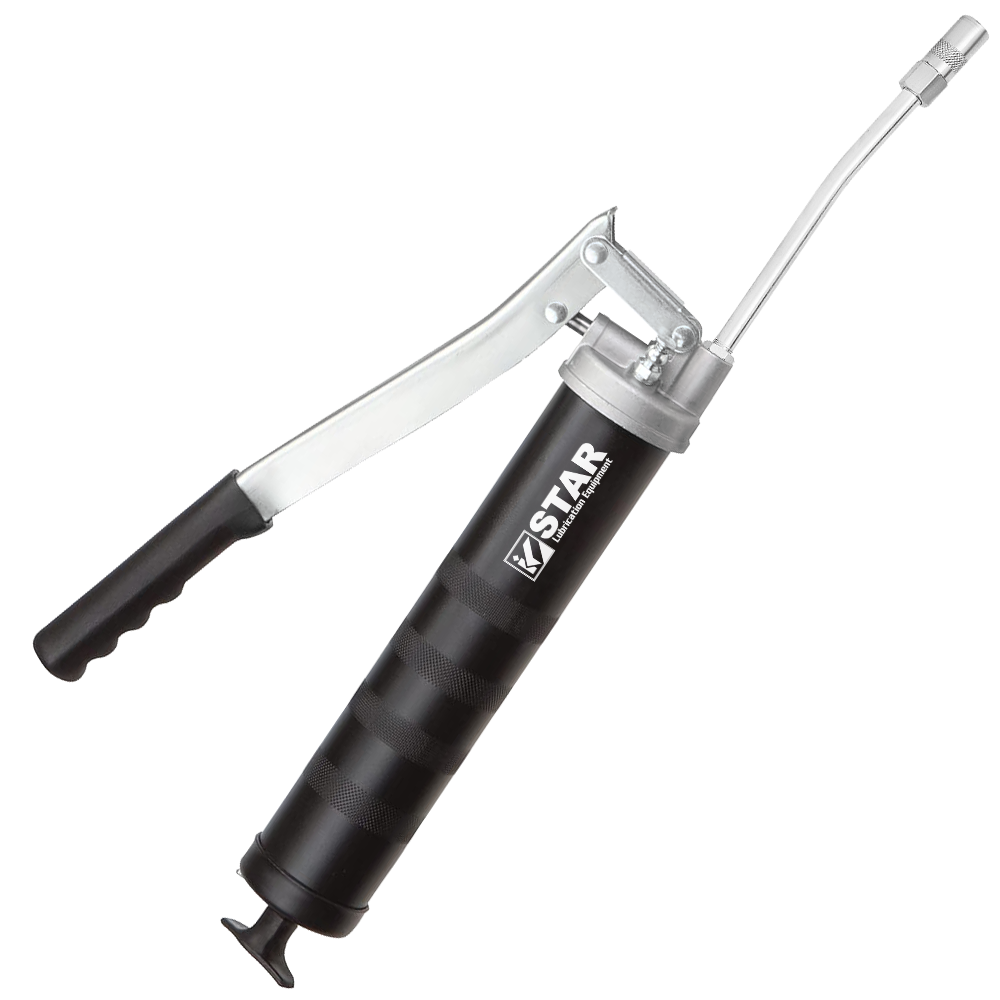


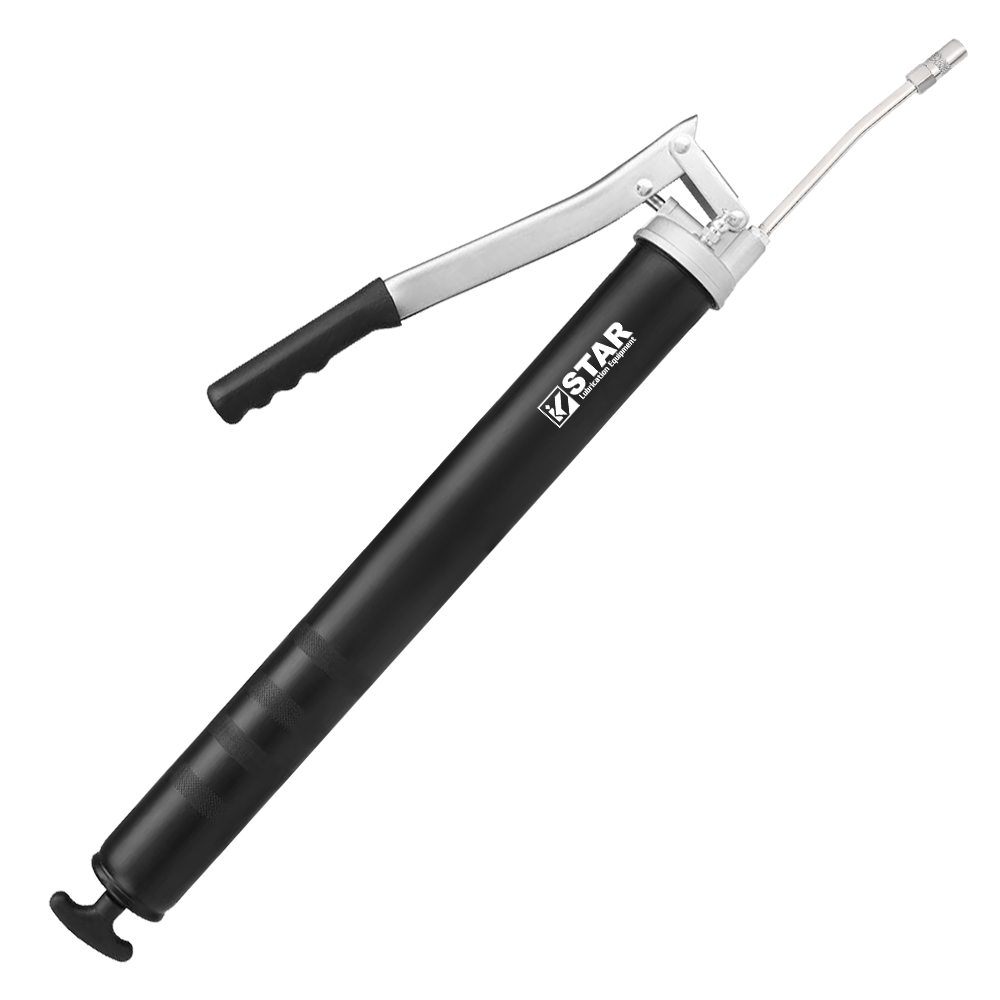
S-709 Lever Action Grease Gun
The STAR S-709 Heavy Duty Lever Action Grease Gun is built for high-pressure industrial lubrication at 10,000 PSI (690 bar), with a variable stroke mechanism that keeps greasing practical even in tight engine bays, pin bushings and confined-access fittings where a full lever swing is not possible. Short strokes develop the same head pressure as full strokes, so the gun serves crusted zerks on construction, agricultural and fleet equipment without demanding full-swing clearance.
We at STAR pair the variable-stroke mechanism with a CNC-machined aluminium die cast head, a 57.15 mm cold-drawn steel barrel with 1.2 mm wall thickness, and a heavy follower spring for positive priming. The S-709 accepts four loading methods, 14 oz. (400 g) cartridge, 500 cc bulk, suction fill and filler pump, delivering 1 gram per stroke or 1 oz. per 28 strokes. 40+ years of manufacturing experience with OEM and private-label options on request.
Rugged Build Quality
- Variable stroke mechanism: short partial strokes develop full head pressure, so the S-709 greases tight-space fittings where a full lever swing is blocked by bodywork, pin bushings or engine-bay clutter.
- 10,000 PSI (690 bar) output: heavy-duty working pressure that clears crusted chassis zerks, old kingpins and stiff grease paths that defeat 6,000-8,000 PSI guns.
- CNC-machined aluminium die cast head: high-tolerance precision head with machined non-return valve seat, sized for sustained 10,000 PSI working pressure.
- Cold-drawn steel barrel: 57.15 mm outer diameter with 0.049" (1.2 mm) wall thickness, dimensioned for 14 oz. (400 g) standard grease cartridges or 500 cc bulk fill.
- Extra-heavy follower spring: maintains positive grease-column pressure against the plunger for instant priming after reload, whether bulk or cartridge.
- 4-way loading: accepts 14 oz. (400 g) cartridge, 500 cc bulk dip, suction fill through the bottom port, or filler pump transfer from depot-scale pails.
- 500 cc / 15 oz. bulk capacity: enough grease for a full 25-30 fitting chassis route or a complete tractor service cycle between reloads.
- 1 g / stroke delivery: precise 1 gram per stroke output (1 oz. per 28 strokes) gives operators fine metering control on bearings, U-joints and tie rod ends.
- Rolled head threads: quick reload with a smoother unscrew-load-rescrew cycle, resistant to cross-threading and galling over thousands of reload cycles.
- Knurled barrel: textured pattern gives a secure grip in oily workshop conditions, even with grease-coated hands or gloves.
- Non-slip textured powder coating: durable textured finish over the body for weather, chemical and abrasion resistance in service environments.
- Machined non-return valve: holds grease-column pressure between strokes, prevents backflow, contributes to consistent per-stroke output at 10,000 PSI.
Features / Loading Options
The S-709 supports four industry-standard grease loading methods and a variable-stroke action that develops full head pressure on partial lever strokes for tight-space greasing.
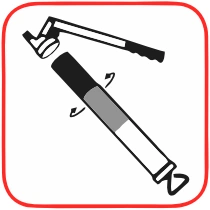 Cartridge Loading
14 oz. (400 g) standard
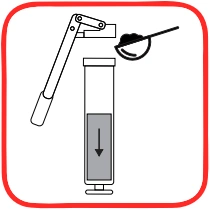 Bulk Loading
15 oz. / 500 cc
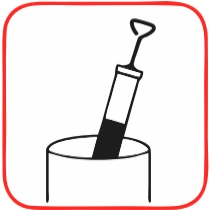 Suction Filling
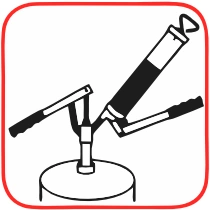 Filler Pump
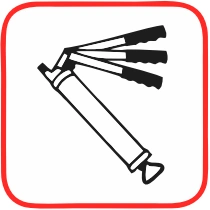 Variable Stroke
Tight-space greasing
How the S-709 Works
The S-709 works on the standard lever action cycle with one important difference: the variable-stroke mechanism lets the operator choose stroke length to match the available handle clearance. Three stages describe a full greasing cycle:
- Load & prime: either screw a 14 oz. (400 g) cartridge into the head, bulk-fill the 500 cc barrel by dip, suction-fill through the bottom port, or attach a filler pump. Retract and lock the plunger rod in the side slot during fill; release it after to let the heavy follower spring seat the grease column. Crack the head a quarter turn, pump three to five strokes to bleed air, retighten.
- Stroke & pressurize (variable): each full lever stroke draws 1 gram of grease through the non-return valve and builds head pressure to 10,000 PSI (690 bar). When tight clearance prevents a full swing, short partial strokes generate the same peak pressure; delivery volume scales with stroke length, but the pressure at the coupler is the same. This is the advantage on pin bushings, engine-bay fittings and inside-wheel-arch zerks.
- Dispense at the fitting: clip the hydraulic coupler or rigid spout onto the zerk, pump full or partial strokes until fresh grease appears at the bearing seal, and disconnect. Typical counts at 1 g/stroke: chassis zerk four strokes, U-joint six to eight, wheel bearing eight to twelve, excavator pin twelve to twenty. A 14 oz. cartridge holds approximately 400 strokes of grease.
The gun is fully mechanical. No batteries, air lines or electricity needed, which matters in field service on construction sites, mining access roads and farm equipment where shop-floor infrastructure is not available.
| Parameter | Value |
|---|---|
| Model | S-709 |
| Type | Manual Lever Action Grease Gun |
| Mechanism | Lever Type (Hand Operated) |
| Delivers | 1 g / Stroke (1 oz. / 28 Strokes) |
| Pressure Developed | 10,000 PSI (690 bar / 69 MPa) |
| Filling Options | Cartridge, Bulk, Suction, Filler Pump (4-way) |
| Cartridge Capacity | 14 oz. (400 g) standard grease cartridge |
| Bulk Capacity | 15 oz. / 500 cc / 500cc (cubic cm), variable fill depending on grease density |
| Barrel Diameter (Ø) | 57.15 mm / 2-1/4" |
| Barrel Wall Thickness | 0.049″ / 1.2 mm cold-drawn steel |
| Head Material | CNC-machined Aluminium Die Cast |
| Body Finish | Non-slip textured powder coating |
| Thread Options | 1/8″ BSPT / 1/8″ NPT / M10 x 1 / Custom |
| Extension / Hose Size | 6" (150 mm) Steel Extension / 12" (300 mm) Flexible Hose / Both |
| Coupler | Hydraulic coupler (standard), 4-jaw with ball check (optional) |
| Grease Grade Compatibility | NLGI 1, NLGI 2, NLGI 3 (lithium, calcium, aluminum complex, polyurea, moly-fortified) |
| Operating Temperature | -10°C to +80°C |
| Country of Origin | India (Made in Ludhiana) |
| Certifications | ISO 9001:2015, CE, RoHS compliant |
| HS Code | 8205 |
| Warranty | 1 year against manufacturing defects |
| OEM / Private Label | Available (MOQ applies) |
Every S-709 ships ready to use with all essential accessories included. Available in three kit configurations to match your setup and application.
6″ (150 mm) Steel Extension
Hydraulic Coupler
Instruction Manual
12″ (300 mm) Flexible Hose
Hydraulic Coupler
Instruction Manual
6″ Steel Extension
12″ Flexible Hose
Hydraulic Coupler
Instruction Manual
R = Rigid Extension
F = Flexible Hose
RF = Fixed Rigid Extension & Flexible Hose both included
Every kit is fully customizable. Additional couplers, connectors, pointed nozzles, or any other accessories can be included in the box as per your requirement.
Contact us for custom kit configurations.
Four specs set the S-709 apart from 6,000 PSI and 8,000 PSI lever guns, and from the 12,000 PSI steel-head S-707. Each one maps to a real decision in buying this gun for a specific job:
The S-709 is engineered for general-purpose lubrication across a wide range of industries. Its 10,000 PSI pressure rating and 4-way loading make it versatile enough for any environment from small workshops to heavy industrial operations.
S-709 Variants & Related Models
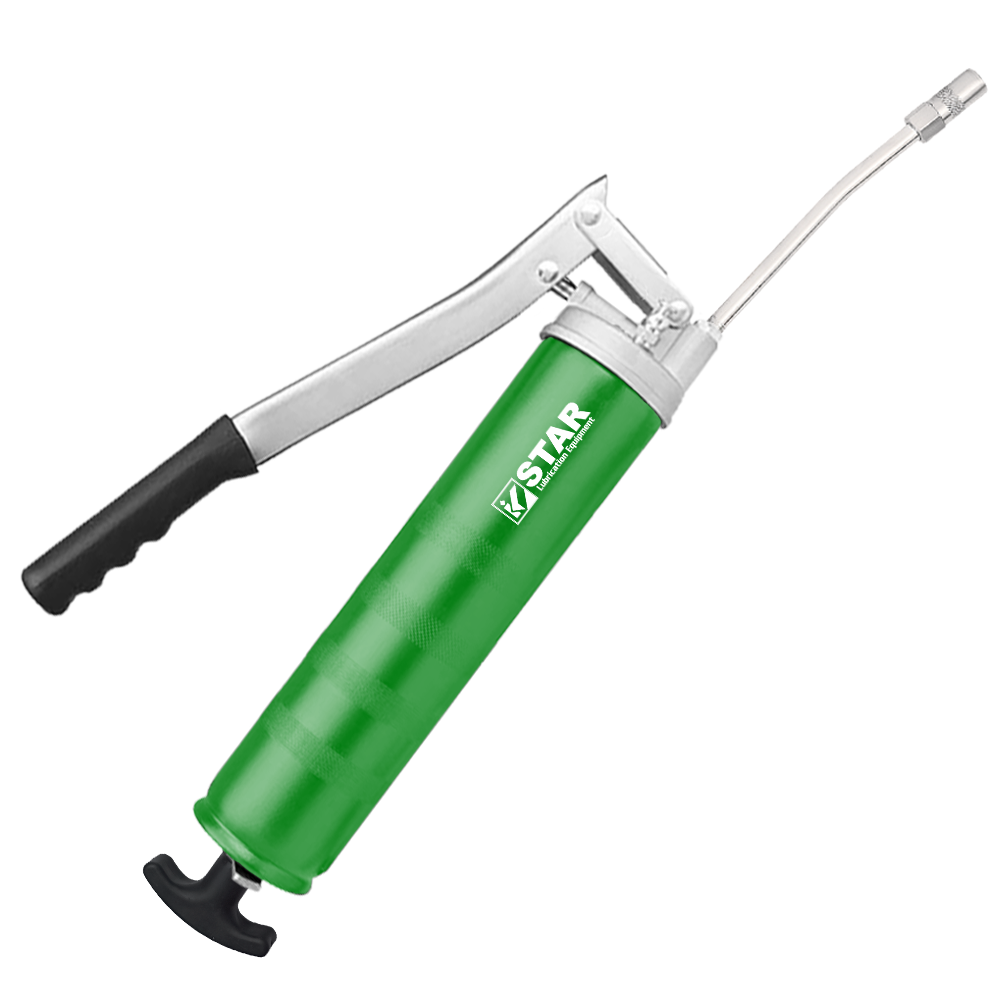
S-710DC Heavy Duty Lever Action Grease Gun Wide Barrel 650 cc Australian 450 g
20 oz. / 650 cc
450 g cartridge
Wide Barrel (63 mm)
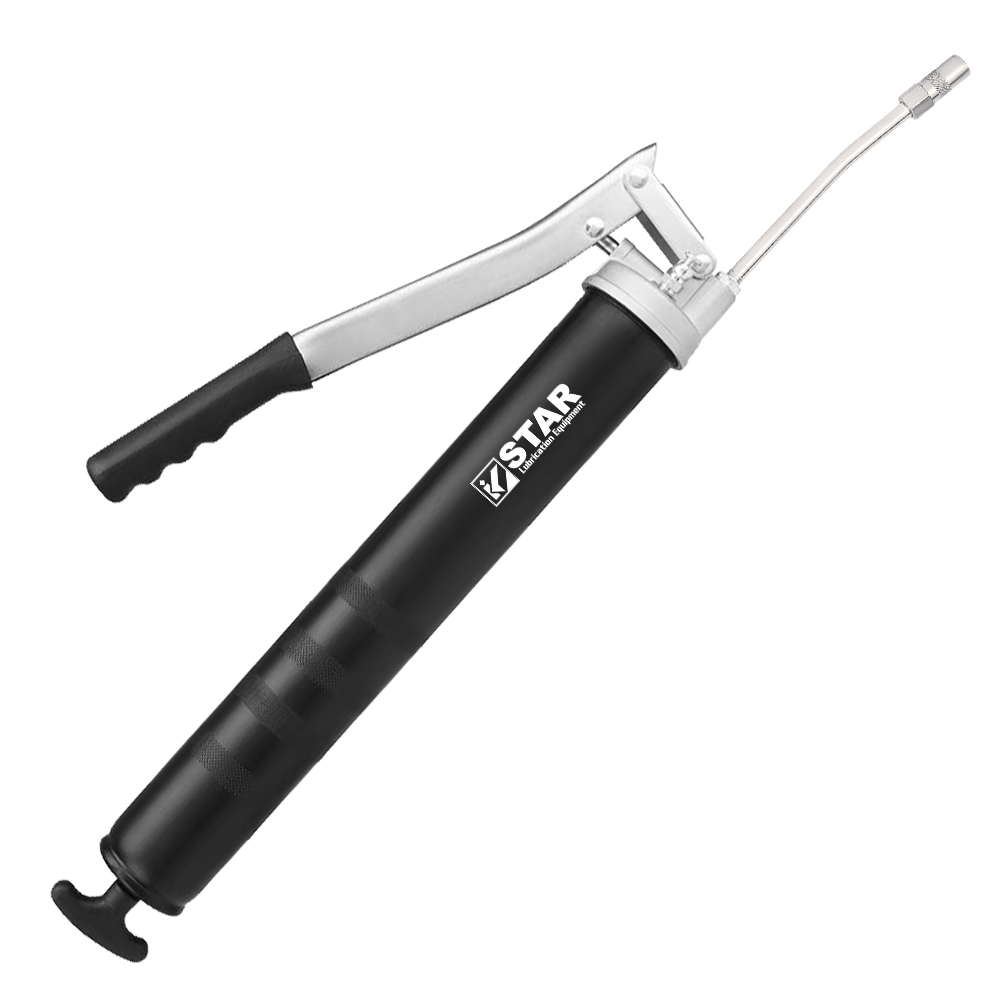
S-724DC Heavy Duty Lever Action Grease Gun High Capacity 24 oz 750 cc
24 oz. / 750 cc
High Capacity
S-732DC Heavy Duty Lever Action Grease Gun Extra Long Barrel 32 oz 1000 cc
32 oz. / 1000 cc
Extra Long Barrel
Compatible Accessories
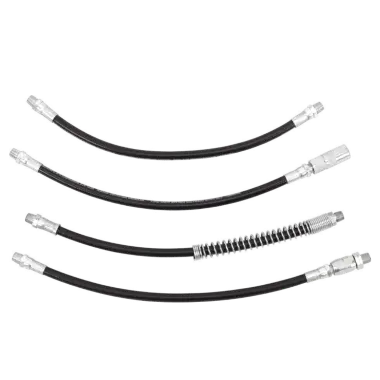
Flexible Hoses
Multiple lengths available
(12", 30", 36" and more)
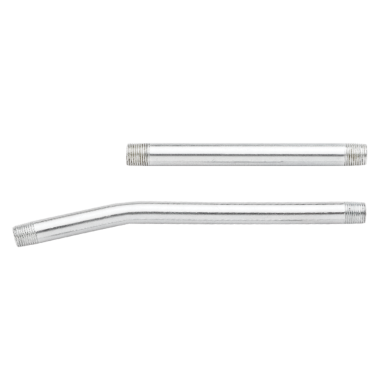
Steel Extensions
Multiple lengths available
(6", 24" and more)
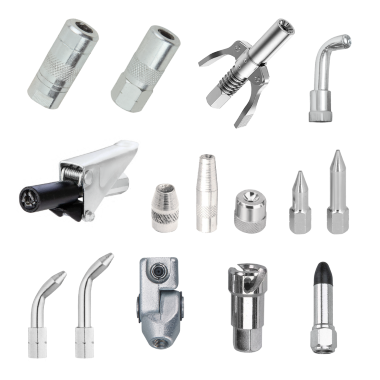
Couplers & Connectors
All types available
(standard, 4-jaw, pin type)
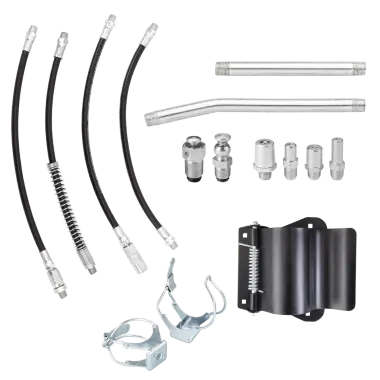
All Grease Gun Accessories
Full range available
(springs, coupler kits, loaders)
Related Product Categories
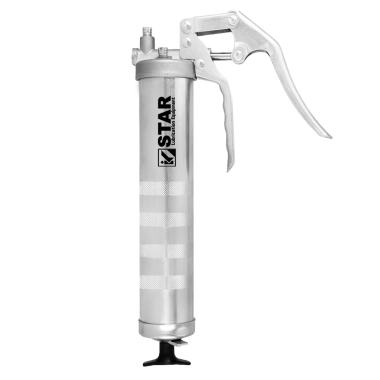
Pistol Action Grease Guns
One-handed trigger models
for tight-access service
Couplers & Connectors
Hydraulic and 4-jaw
rated for 10,000 PSI service
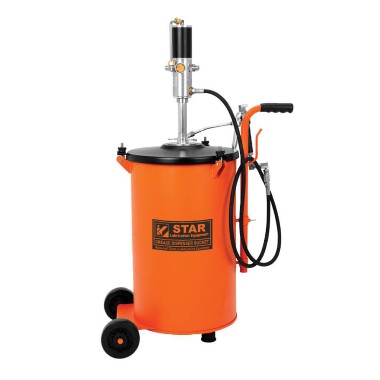
Pneumatic / Air Operated
Air-powered lube systems
for fixed-bay workshops
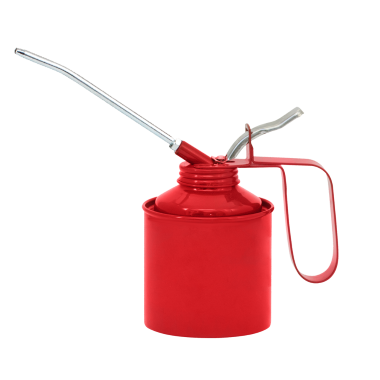
Oil Cans
Hand-pump oilers
for thin oil and chain lube
Buying Guide: When the S-709 is the Right Choice
The S-709 occupies the heavy-duty tier of the STAR lever action range. It is not the cheapest gun, and it is not the maximum-pressure flagship. Pick it when the work calls for 10,000 PSI with variable-stroke access; pick something else when those features are not needed.
Pick the S-709 for tight-access heavy-duty service
Variable stroke is the reason shops choose the S-709. If the service route includes engine-bay greasing, chassis zerks behind frame rails, excavator pin bushings with partial hood clearance, or older equipment with awkward fitting access, the variable-stroke action pays back on every service visit. A fixed-stroke 10,000 PSI gun is cheaper, but it cannot reach fittings where the lever cannot swing its full arc. For dealer service bays, mobile mechanics and mining yard service, the S-709 earns its place as the heavy-duty workhorse.
Step up to the S-707 for 12,000 PSI and steel head
Where routine work meets severely crusted fittings that resist at 10,000 PSI, the S-707 delivers 12,000 PSI with a drop-resistant steel head. The S-707 is the right pick when grease service involves heavy construction equipment with seized zerks, old industrial machinery with neglected fittings, or mining haul-truck suspension bearings that have not been touched in months. It trades the S-709's variable stroke and aluminium head for peak pressure and steel durability.
Step down to the S-706 for standard 8,000 PSI service
For standard fleet and agricultural service where fittings accept grease at 6,000-8,000 PSI and tight-access greasing is not the daily pattern, the S-706 (8,000 PSI medium-duty) is a cost-effective pick. It uses the same 4-way loading and aluminium die cast head as the S-709 without the variable stroke or the 10,000 PSI pressure tier. Workshops doing car chassis service, small-tractor work and utility-trailer maintenance typically find the S-706 sufficient.
Consider the S-708 2X volume line for high-volume routes
If the service route is long (25-30 fittings per machine, 8-10 machines per shift) and cartridge loading is not required, the S-708 family delivers 2.4 g per stroke at 6,000 PSI, cutting total stroke count roughly in half. The S-708 is bulk/suction only, so a shop that reloads from pails benefits; a shop that relies on cartridges is better served by the S-709.
For OEM, distributor and heavy-duty trade buyers
The S-709 is a popular OEM base for distributors targeting heavy-equipment markets, construction supply houses and fleet maintenance programmes. Variable stroke is a technical selling point that differentiates the S-709 from commodity 10,000 PSI lever guns. Reach the STAR export team for private-label packaging, regional thread variants, custom colour options and mixed-container consolidation.
Frequently Asked Questions: Lever Action Grease Gun
What makes the S-709 a heavy duty lever grease gun?
The S-709 is heavy duty because of three combined features: 10,000 PSI (690 bar) sustained pressure, variable-stroke action for tight-space greasing, and CNC-machined aluminium die cast head. At 10,000 PSI it clears crusted chassis zerks, old tractor kingpins and stiff grease paths that defeat 6,000-8,000 PSI guns. The variable stroke lets the lever develop full head pressure on partial strokes, so fittings in blocked-access locations (engine bays, pin bushings, inside wheel arches) can be serviced without the clearance a conventional lever needs. The aluminium die cast head keeps the gun lighter than steel-head alternatives while holding precision tolerance at 10,000 PSI.
What is variable stroke on a lever grease gun?
Variable stroke means the lever can be pumped at partial length and still develop full head pressure at the coupler. On a fixed-stroke gun, a half-stroke delivers half the grease volume at reduced head pressure, so partial strokes are ineffective. On the S-709, a partial stroke delivers less volume per stroke but the same 10,000 PSI peak pressure, so the gun works wherever handle clearance is limited. Practical examples: greasing between chassis rails where the lever cannot swing the full arc, servicing pin bushings on excavator booms with tight cover clearance, and working engine-bay U-joints without removing the hood.
How does 10,000 PSI compare with 6,000 and 12,000 PSI grease guns?
10,000 PSI positions the S-709 as the heavy-duty tier between standard 6,000 PSI lever guns and the 12,000 PSI flagship S-707. 6,000 PSI (e.g. S-706, S-706A) handles the 85 percent of field fittings that accept grease at normal pressure; 10,000 PSI (S-709) clears crusted zerks and older kingpins that resist at 8,000 PSI; 12,000 PSI (S-707 with steel head) is reserved for severely seized fittings requiring maximum sustained pressure. For most professional service work the S-709 is the pragmatic heavy-duty pick. Step up to the S-707 only when 12,000 PSI is routinely required.
How much grease does the S-709 deliver per stroke?
The S-709 delivers 1 gram per stroke at full-stroke length, equivalent to 1 ounce per 28 strokes, and a full 14 oz. (400 g) cartridge lasts approximately 400 strokes. On partial variable-stroke operation, volume per stroke scales down (roughly 0.5 g on a half-stroke) while pressure stays at full 10,000 PSI. Service counts at full stroke: chassis zerk four strokes, U-joint six to eight, wheel bearing eight to twelve, excavator pin twelve to twenty, heavy loader pivot fifteen to twenty-five. Count strokes against the equipment manufacturer's grease-quantity specification to avoid over-greasing bearing seals.
How do I load a 14 oz. cartridge into the S-709?
Load a 14 oz. Cartridge in six steps. Retract the plunger rod fully and lock it in the side slot. Next, unscrew the barrel head. Then, peel the metal pull-tab off the cartridge nose end. After that, insert the cartridge nose-end first into the barrel. From there, peel the plastic seal off the bottom end and screw the head back onto the barrel. Finally, release the plunger rod from the side slot so the heavy follower spring seats the cartridge, loosen the head a quarter turn and pump three to five strokes to bleed air. Retighten the head. The S-709 is primed. Rolled threads on the head make the reload quick and reduce cross-threading risk on repeated reloads.
Can I use bulk grease instead of cartridges in the S-709?
Yes, the S-709 supports 500 cc (15 oz.) bulk fill directly into the barrel. Bulk fill procedure. Retract and lock the plunger rod in the side slot. Next, unscrew the barrel from the head. Then, scoop grease from the pail directly into the barrel with a bulk-loader paddle or fill gun, or dip the barrel opening into the grease pail. After that, screw the barrel back onto the head. From there, release the plunger rod and bleed air through the head by loosening a quarter turn. Bulk fill is the fastest and cheapest loading method for fleet and mine operations reloading multiple times per shift from 5 kg or 15 kg pails.
How do I prime the S-709 after reload?
Prime the S-709 in four steps. Ensure the plunger rod is released and the follower spring is pressing on the grease column. Next, loosen the barrel head one-quarter turn to open the air-bleed path. Then, pump the lever slowly three to five strokes until grease flows from the loosened joint. After that, retighten the head firmly and pump two more strokes to pressurize the chamber. Connect the hydraulic coupler to a zerk. Fresh grease should appear on the first stroke. Air lock is the most common priming failure. Prevention is to keep the barrel fully loaded between uses and bleed thoroughly after each reload rather than skipping the bleed step.
How do I fix air lock in the S-709?
Fix air lock by. Loosening the barrel head a quarter turn. Next, pumping the lever slowly three to five strokes while watching the loosened joint for grease flow. Then, retightening the head once grease flows steadily. After that, resuming normal pumping. If air lock persists after two bleed attempts, unscrew the head fully and check the follower plate for tilt or the plunger rod for binding. Air lock happens most often after a bulk reload where the grease pail was nearly empty (air gets drawn in with the grease) or after cold-weather storage where stiff grease has pulled away from the follower plate. Prevention: always refill before the barrel is empty, seat the follower plate firmly on fresh grease after reload.
Why does my S-709 stop pumping after a quarter cartridge?
Pumping failure at quarter-cartridge is usually caused by. Plunger rod seal bypass allowing grease to leak backward. Next, air lock above the follower plate where the cartridge tail developed an air pocket during use. Then, worn non-return valve in the head allowing grease to return to the barrel, or. After that, the plunger rod hanging up on the lock slot. Troubleshoot in order: bleed air via head loosening first (covers 70 percent of cases), inspect the plunger rod seal for circumferential wear, unscrew the head to inspect the non-return valve for grease debris or a stuck ball, replace the plunger rod seal from a STAR spare-parts kit if bypass is visible. At 10,000 PSI the seal works harder than on lower-pressure guns, so plan to inspect seals every 12 months of daily use.
Can I mix different grease types in the S-709?
No. Mixing incompatible thickener chemistries (lithium + calcium, lithium + polyurea, calcium + aluminium complex) causes chemical reactions that form hard deposits and clog the non-return valve and head. NLGI grade mixing within the same thickener family (NLGI 1 + NLGI 2 lithium) is usually safe. To switch grease types: empty the barrel, solvent-flush with mineral spirits, dry thoroughly, lightly re-grease the plunger rod seal with the new grease, and reload with a single chemistry. Workshops servicing mixed fleets should maintain separate labeled guns per chemistry. The S-709's 10,000 PSI pressure makes deposit buildup more damaging than on lower-pressure guns because trapped debris becomes a pressure-concentration point.
What grease works in the S-709 for farm and heavy equipment?
The S-709 is compatible with NLGI 1, 2 and 3 greases across all standard chemistries: lithium complex, calcium sulphonate, aluminium complex, polyurea, moly-fortified EP (extreme pressure), and synthetic PAO-based. For farm equipment, NLGI 2 lithium complex or moly-fortified EP is standard. For heavy excavator pins and loader bushings, moly-fortified EP or calcium sulphonate handles the shock loading. For marine service, calcium sulphonate or aluminium complex resists water wash-out. The aluminium die cast head and nitrile plunger seal are compatible with the full -10°C to +80°C operating range. Synthetic greases rated to -30°C or +150°C require verification against the seal package specifications.
How often should I clean the S-709?
Clean the S-709 every 6 months for moderate workshop use or every 3 months for heavy daily use (10+ reloads per shift). Deep clean procedure. Empty the barrel. Next, unscrew the head and inspect the non-return valve. Then, wipe the barrel interior with a solvent-dampened rag. After that, check the follower plate for tilt or wear. From there, solvent-clean the head assembly and coupler. Finally, inspect the plunger rod seal for circumferential wear lines. And last, reassemble with fresh grease lightly applied to seals. The 10,000 PSI pressure rating means small seal wear becomes performance wear faster than on lower-pressure guns. Catch it early with scheduled inspection.
How should I store the S-709 between uses?
Store the S-709 vertically head-up between shifts, with a loaded barrel and the lever backed off. For storage over 30 days: back off the lever completely, keep the barrel loaded with grease to prevent air ingress through seals, store at 10-30°C in a dry workshop location, keep out of direct sunlight. For storage over a year: drain the barrel completely, clean inside and out, lightly oil the plunger rod seal with a grease-compatible corrosion inhibitor. After long storage, pump three to five strokes to waste before servicing fittings to clear any oxidized grease on the head and non-return valve. Never store with an empty barrel. The follower spring can extrude debris past worn seals.
What PPE is mandatory when using the S-709 at 10,000 PSI?
Mandatory PPE: wraparound safety glasses, nitrile chemical-resistant gloves, closed-toe shoes. Additional: long sleeves covering forearms where the gun is held. Safety rules: never point the coupler or flex hose at any body part, keep the hand holding the gun behind the coupler head, inspect the 12" flex hose before each use for cracks, bulges or stiffness, never test grease flow by pressing the coupler against skin or fabric. At 10,000 PSI (690 bar), a pinhole in the hose or an unseated coupler can drive grease through skin and requires immediate surgical treatment. Treat any grease-contact puncture as a surgical emergency and go to hospital; do not wait.
What should I do if grease is injected under the skin from the S-709?
Grease injection injury is a surgical emergency. Go immediately to a hospital emergency department. Do not wait, do not self-treat, do not evaluate by wound appearance. The entry puncture looks small but the grease travels along tissue planes far beyond the visible wound at 10,000 PSI pressure. Injected grease does not absorb. It must be surgically removed to prevent tissue necrosis, bacterial infection and potential amputation. On the way to hospital: elevate the affected limb, do not apply pressure or tourniquet, do not cut or squeeze the wound. Bring the safety data sheet (SDS) for the specific grease in use so the surgical team knows the chemistry. Workshops using the S-709 should post the injection-injury protocol near the first aid station.
Is the S-709 suitable for cold-weather service routines?
The S-709 operates across -10°C to +80°C (14°F to 176°F), which covers most commercial cold-weather service conditions. In sub-zero temperatures grease stiffens, loading and priming take more effort, and the variable stroke feature actually helps because short partial strokes are easier to execute with stiff grease than trying to force a full stroke. Winter-specific practice. Store the gun indoors overnight at 10-20°C to keep the grease pliable. Next, use NLGI 1 grade grease rather than NLGI 2 below -5°C. Then, allow an extra prime cycle after a cold start to clear any stiffened grease from the non-return valve. For operating below -10°C routinely, specify low-temperature synthetic grease and verify the plunger seal package against the grease manufacturer's compatibility chart.
Why Global Buyers Trust STAR
We at STAR have manufactured lever action grease guns since 1980. The S-709 ships with full export documentation, multilingual manuals and the same one-year warranty we apply across the catalogue. Distributors targeting construction, mining and fleet-maintenance trade channels standardise on the S-709 as their heavy-duty-tier SKU; OEM partners get private-label packaging, regional thread variants and mixed-container consolidation on request.