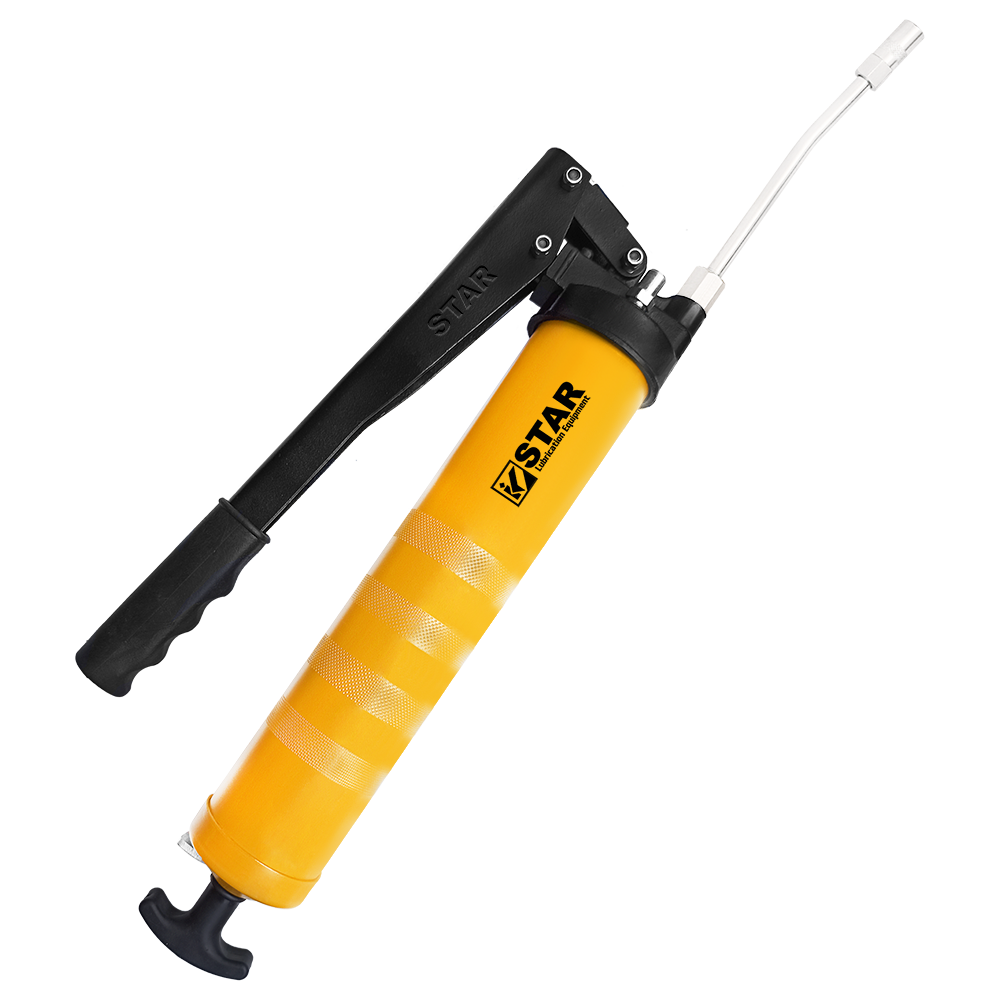

S-711DP Lever Action Grease Gun
The STAR S-711DP Lever Action Grease Gun – Dual Piston is built for operators who spend a lot of their shift at grease fittings: heavy truck fleets, agricultural contractors, construction and mining equipment service teams. Its dual-piston mechanism delivers up to three times the output of a standard single-piston lever grease gun per stroke (2.4 g per pump, as listed in the spec table), so a service round covers the same machines in about a third of the pumping time. The 500 cc (15 oz.) reservoir and standard 14 oz. (400 g) cartridge compatibility let the gun fit existing grease-supply stocking, and the full 12,000 PSI (830 bar) at the coupler, the top pressure tier for hand-operated grease guns, clears fresh grease through fittings that have sat crusted for months.
We at STAR built the S-711DP for operators frustrated by two recurring problems on single-piston guns: slow lubrication on large fitting counts, and loss of prime in cold weather. The dual grease inlet keeps the pump primed even when one feed channel sees air (common in sub-zero service, partial fills or after long storage), so the first pump after reload produces grease, not a dry stroke. The variable stroke mechanism lets operators build full 12,000 PSI pressure on partial lever swings, useful on fittings where a full swing is physically blocked by machine structure. Four-way loading (cartridge, bulk pack, suction, filler pump) and the CNC-machined aluminium die cast head complete the engineering package.
Rugged Build Quality
- High-tolerance CNC-machined aluminium die cast head. The head is cast from aluminium then CNC-finished to tight tolerances, so grease passages, the non-return valve seat, piston bore and coupler thread stay aligned under repeated 12,000 PSI cycling. Lighter than a steel head without sacrificing dimensional accuracy.
- Dual-piston pump mechanism delivering 2.4 g per full lever stroke. Two pistons work in parallel on every stroke of the handle, so each stroke moves roughly three times the grease of a standard single-piston gun (whose spec is typically 1 g per stroke). On a 30-fitting service round that takes 120 standard strokes, the S-711DP completes the same round in roughly 50 strokes, about a third of the pumping time, which compounds over a full shift across multiple machines.
- Dual grease inlet for prime reliability. Grease reaches the pump through two separate feed channels in the head instead of one. If air gets into one channel (common in sub-zero conditions where grease thickens, during partial-fill reloads, or after the gun has sat in storage for weeks), the second channel still feeds the pump. The first pump of the lever after reload produces grease, not a dry stroke, which eliminates the priming dance that single-inlet guns sometimes require in cold or neglected service.
- Variable stroke mechanism. The lever geometry is designed so that a partial swing (say, 30 or 40 percent of the full arc) still builds the full 12,000 PSI pressure at the coupler. This matters on fittings where a full lever swing is blocked by surrounding machine structure: excavator pin clusters where the hydraulic lines sit close, equipment linkages behind chassis members, overhead service points with low ceiling clearance. The operator can pump through whatever arc is available and still move grease at full pressure.
- Robust barrel in 0.049" (1.2 mm) cold-drawn steel. The barrel wall is drawn through a die at room temperature, which work-hardens the steel for predictable strength at 1.2 mm thickness. The 57.15 mm inner diameter matches the worldwide 14 oz. (400 g) cartridge standard, so stocked cartridges from any major supplier fit without adapters. The thicker wall also absorbs dual-piston shock loading.
- Extra-heavy follower spring. A stronger-than-standard compression spring sits behind the follower plate and keeps the grease column pressed firmly against the pump, even on half-empty fills or after storage. Standard springs can lose prime at low fill levels; the heavier spring prevents that.
- Rolled threads on the barrel-to-head joint. Rolled threads displace steel under pressure rather than cutting it away, which work-hardens the surface for stronger, smoother engagement. Important on a joint that gets unscrewed every cartridge swap: rolled threads survive thousands of reload cycles without cross-threading.
- Machined non-return valve in the head. A precision-machined one-way valve sits between the pump chamber and the coupler outlet. It opens during a pump stroke and closes between strokes to hold peak pressure, so the grease column does not bleed back. Without it, partial strokes would never build the 12,000 PSI needed to clear a crusted fitting.
- Knurled barrel grip. The barrel surface has a machined cross-hatch pattern that provides tactile grip when hands are oily, gloved, or wet. No moving parts, does not wear out over the life of the gun.
- Non-slip textured powder-coated body. Electrostatic powder coating with a textured surface finish. Resists corrosion in humid climates, marine service, chemical plants, and wet outdoor use. The texture also adds grip on the handle sections for long service sessions.
- 12,000 PSI (830 bar) maximum working pressure. This is the top pressure tier for any hand-operated grease gun. The pressure matters because grease fittings on equipment that sits outdoors between service intervals develop crusts from dust, moisture, and oxidation: a crusted zerk at 6,000 PSI will often refuse fresh grease and the operator has to skip the fitting or double-pump it. At 12,000 PSI, the gun punches through the crust reliably on the first or second stroke, ensuring every fitting on the service round actually receives fresh grease.
- 4-way loading: cartridge, bulk pack, suction, filler pump. Workshops use 14 oz. (400 g) cartridges, fleet depots bulk-pack from 5 kg, 15 kg or 18 kg pails for lower per-kilogram cost, agricultural operators suction-fill from open containers, high-volume depots use filler pumps for rapid reload. The S-711DP accepts all four formats without conversion kits or head swaps.
Features / Loading Options
The S-711DP accepts grease from all four industry-standard supply formats: cartridge, bulk pack, suction fill, and filler pump. The variable stroke mechanism is part of the same package and lets operators build full 12,000 PSI pressure on partial lever swings.
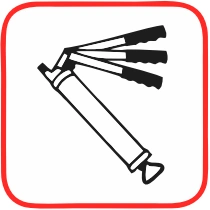 Variable Stroke
Partial swings, full pressure
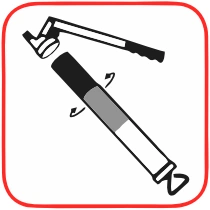 Cartridge Loading
14 oz. (400 g)
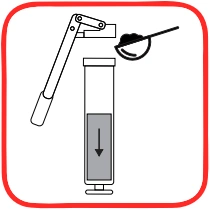 Bulk Loading
15 oz. / 500 cc
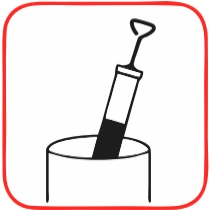 Suction Filling
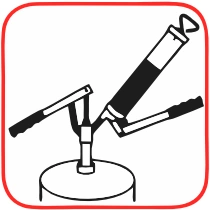 Filler Pump
How the S-711DP Works
The S-711DP works in three stages: load, prime, pressurise and dispense. The dual-piston pump architecture and dual grease inlet change the operator experience at each stage compared with a standard single-piston lever gun.
- Load. Choose one of four loading methods depending on your grease supply. For cartridge fill, retract and lock the plunger rod, unscrew the barrel, peel the metal pull-tab off a standard 14 oz. (400 g) cartridge, insert nose-first, peel the plastic bottom seal, and screw the head back on. For bulk pack, retract and lock the plunger, unscrew the barrel, dip the barrel mouth into a 5 kg, 15 kg or 18 kg grease pail, and pack grease firmly against the sidewalls with a scoop to fill the 500 cc reservoir. For suction fill, retract and lock the plunger with the barrel attached, dip the gun nose into an open grease container, and release the plunger rod slowly so the follower spring draws grease into the reservoir. For filler pump fill, connect a hand-operated or pneumatic filler pump to the 1/8" BSPT inlet on the head and push grease in under pressure.
- Prime. Release the plunger rod from the side-slot lock so the extra-heavy follower spring compresses the grease column against the dual-inlet head. Crack the head a quarter turn to open the air release path, then pump the lever 3 to 5 full strokes with the coupler disconnected. Grease should flow from the head seam on the second or third stroke, faster than a single-inlet gun because both feed channels are drawing simultaneously. Retighten the head when grease flows without bubbles. In cold weather or after long storage, the dual inlet means you rarely need more than 5 strokes even when grease has thickened.
- Pressurise and dispense. Connect the hydraulic coupler to a zerk fitting. Each full lever stroke drives both pistons in parallel, moving 2.4 g of grease through the non-return valve into the coupler at up to 12,000 PSI (830 bar). Partial swings still build full pressure thanks to the variable-stroke mechanism, so fittings with tight lever-arc clearance are reachable. Pump until fresh grease appears at the bearing seal, then disconnect. A 500 cc fill covers roughly 40 typical fittings at 12 g each, or about 30 fittings on heavier service loads of 15 g.
The S-711DP runs on lever power only: no battery, no compressor, no electrical supply. For fleet depots, agricultural contractor routes, and mining service sites where grease points run into the dozens per machine, the dual-piston output cuts total service time by roughly a third versus standard lever guns. For the occasional grease job on a workshop bench, a lower-output single-piston gun like the S-707 is usually sized right; the dual-piston output is wasted on small service loads where overgreasing is the real risk.
| Parameter | Value |
|---|---|
| Model | S-711DP |
| Type | Manual Lever Action Grease Gun - Dual Piston |
| Mechanism | Dual Piston, Lever Type (Hand Operated) |
| Delivers | 2.4 g / Stroke (1 oz. / 12 Strokes) |
| Pressure Developed | 12,000 PSI (830 bar / 83 MPa) |
| Filling Options | Cartridge, Bulk, Suction, Filler Pump (4-way) |
| Cartridge Capacity | 14 oz. (400 g) standard grease cartridge |
| Bulk Capacity | 15 oz. / 500 cc |
| Barrel Diameter (Ø) | 57.15 mm / 2-1/4" |
| Barrel Wall Thickness | 0.049" / 1.2 mm cold-drawn steel |
| Head Material | CNC-machined Aluminium Die Cast |
| Dual Grease Inlet | Yes (prevents loss of prime in cold weather and partial fills) |
| Variable Stroke | Yes (full pressure on partial lever swings) |
| Body Finish | Non-slip textured powder coating |
| Thread Options | 1/8" BSPT / 1/8" NPT / M10 x 1 / Custom |
| Extension / Hose Size | 6" (150 mm) Steel Extension / 12" (300 mm) Flexible Hose / Both |
| Coupler | Hydraulic coupler (standard), 4-jaw with ball check (optional) |
| Grease Grade Compatibility | NLGI 1, NLGI 2, NLGI 3 (lithium, calcium, aluminium complex, polyurea, moly-fortified EP) |
| Operating Temperature | -10°C to +80°C |
| Country of Origin | India (Made in Ludhiana) |
| Certifications | ISO 9001:2015, CE, RoHS compliant |
| HS Code | 8205 |
| Warranty | 1 year against manufacturing defects |
| OEM / Private Label | Available (MOQ applies) |
Every S-711DP ships ready to use with accessories included, in one of three kit configurations.
6" (150 mm) Steel Extension
Hydraulic Coupler
Instruction Manual
12" (300 mm) Flexible Hose
Hydraulic Coupler
Instruction Manual
6" (150 mm) Steel Extension
12" (300 mm) Flexible Hose
Hydraulic Coupler
Instruction Manual
R = Rigid Extension
F = Flexible Hose
RF = Fixed Rigid Extension & Flexible Hose both included
Kits are fully customisable. Additional couplers, connectors, pointed nozzles and other accessories can be included in the box on request. Contact us for custom kit configurations.
Four engineering choices define the S-711DP's position as the 500 cc entry tier of the dual-piston family. Each addresses a specific constraint that comes with high-volume lever-gun service.
The S-711DP's combination of dual-piston output, dual-inlet priming, and 12,000 PSI pressure targets service work where fitting counts are high, cold or neglected fittings are common, and reload time cuts into productivity.
S-711DP Variants & Related Models
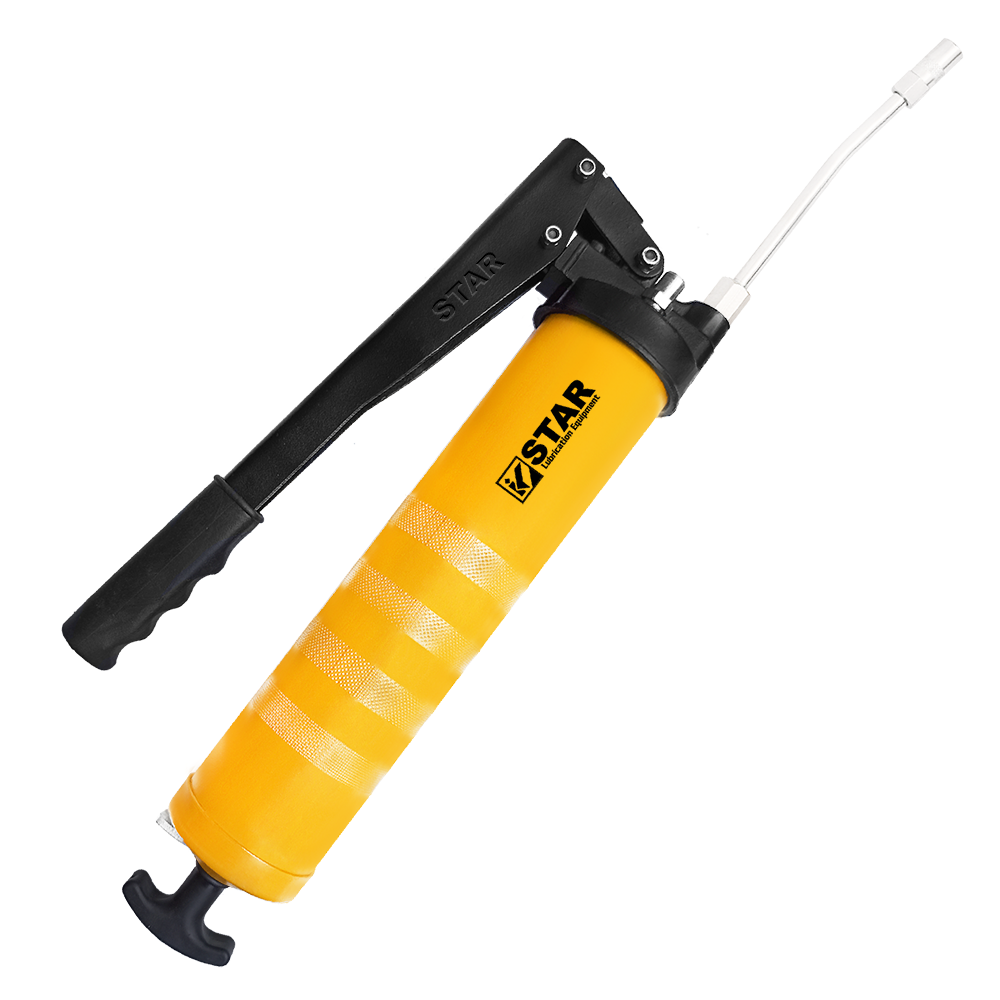
S-713DP Dual Piston Lever Action Grease Gun - Wide Barrel (20 oz. / 650 cc)
20 oz. / 650 cc
450 g cartridge
Wide Barrel (Australian/NZ)
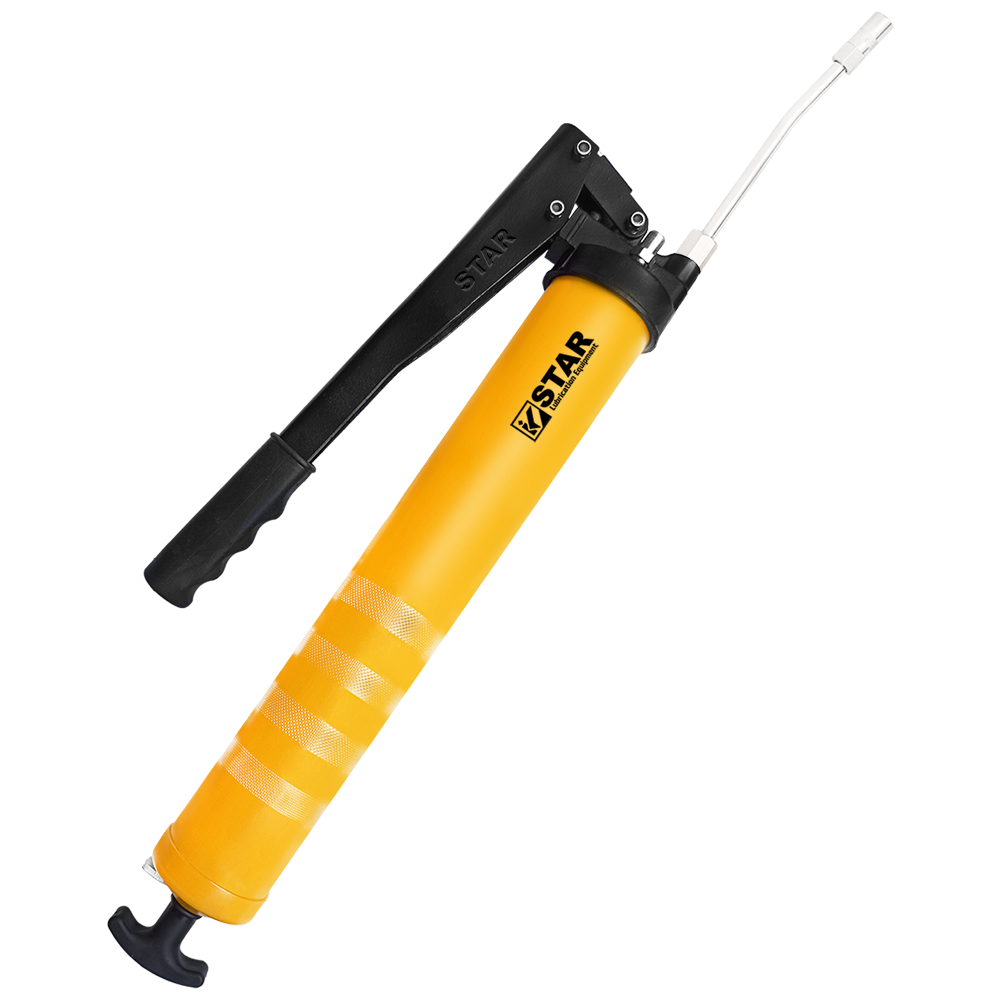
S-712DP Dual Piston Lever Action Grease Gun - High Capacity (24 oz. / 750 cc)
24 oz. / 750 cc
14 oz. (400 g) cartridge
High Capacity (50% More Capacity)
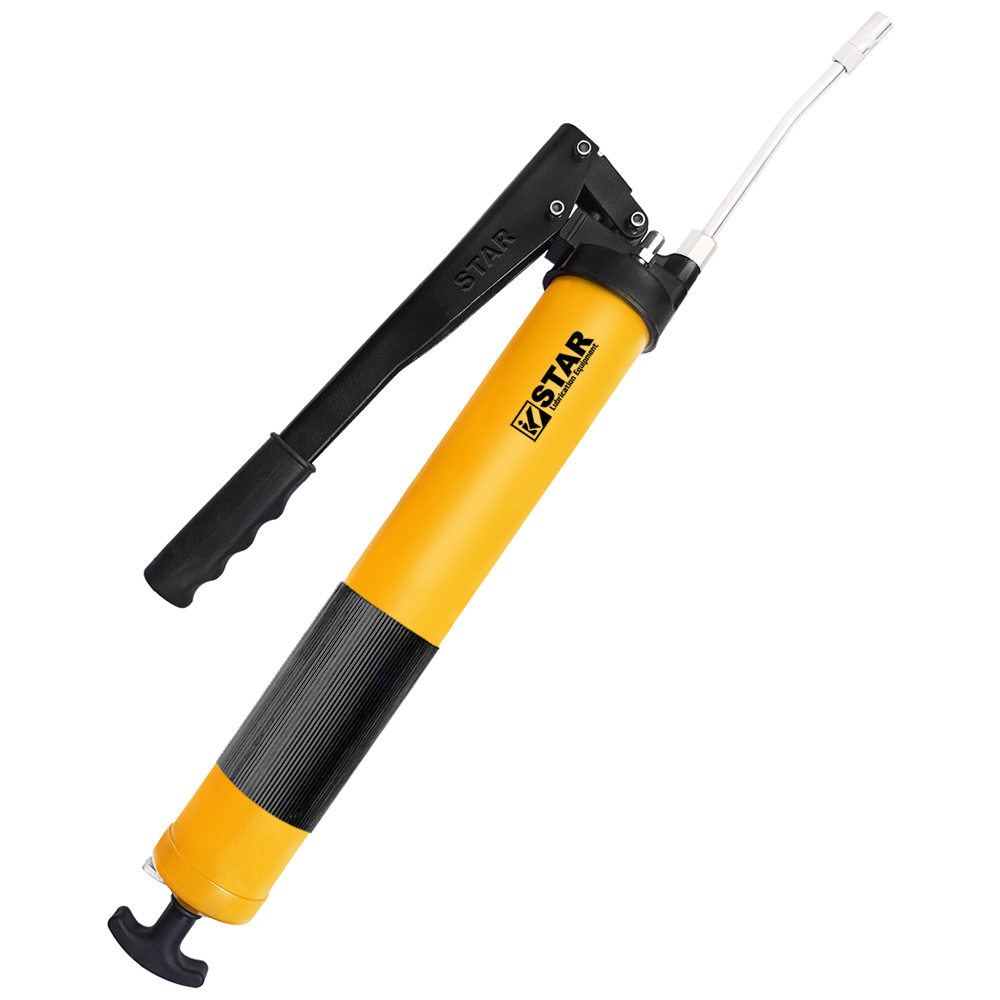
S-712DP/PRO Professional Dual Piston Lever Action Grease Gun (24 oz. / 750 cc)
24 oz. / 750 cc
14 oz. (400 g) cartridge
Pro Tier (Premium Accessory Kit)
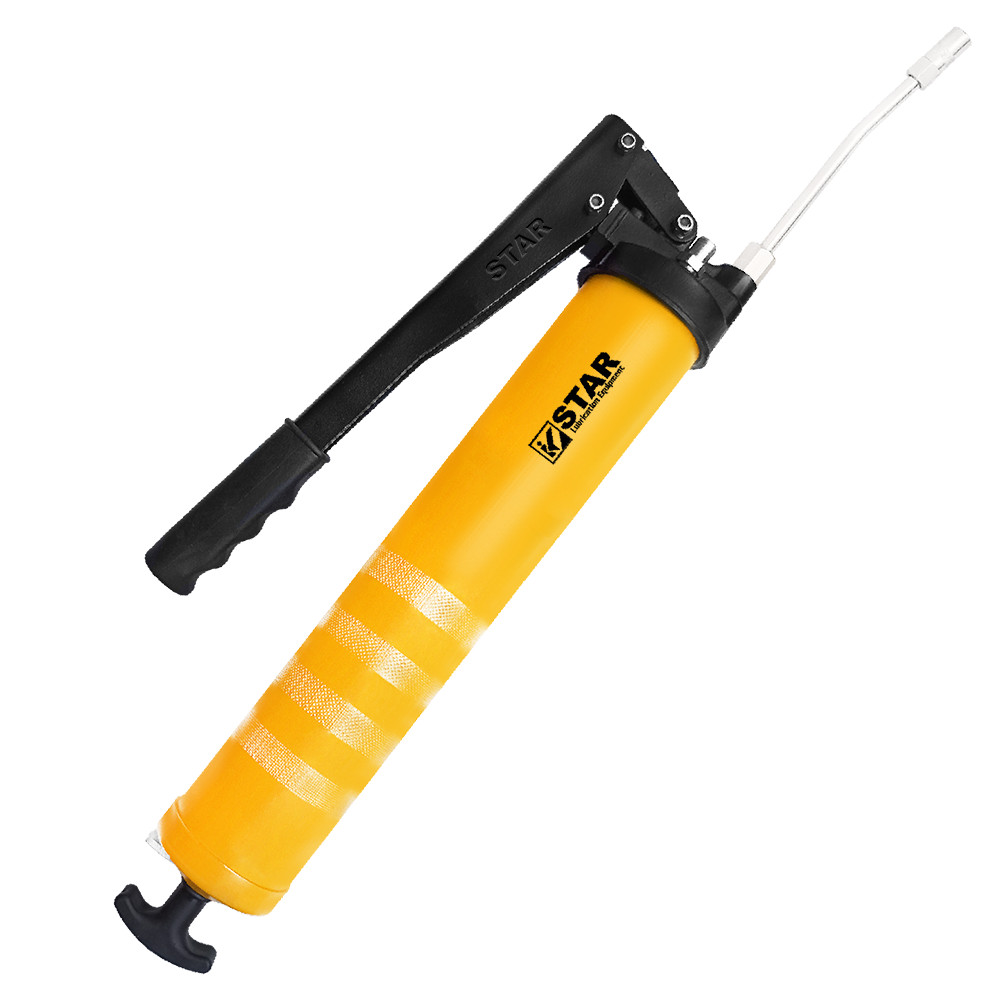
S-714DP Dual Piston Lever Action Grease Gun - Extra Long Barrel (30 oz. / 900 cc)
30 oz. / 900 cc
450 g cartridge
Wide Barrel High Capacity
Compatible Accessories
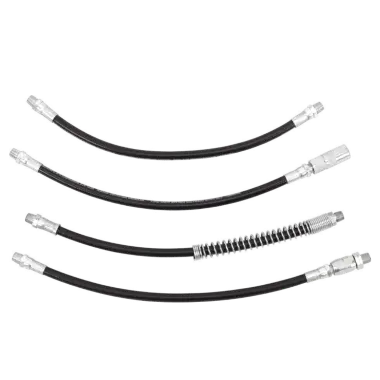
Flexible Hoses
Multiple lengths available
(12", 24", 36" and more)
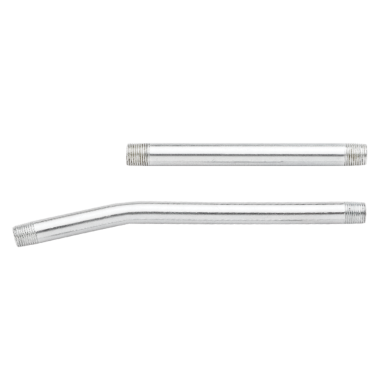
Steel Extensions
Multiple lengths available
(6", 18", 24" and more)
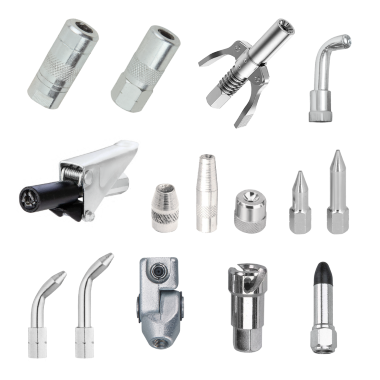
Couplers & Connectors
All types available
(hydraulic, 4-jaw, quick-release)
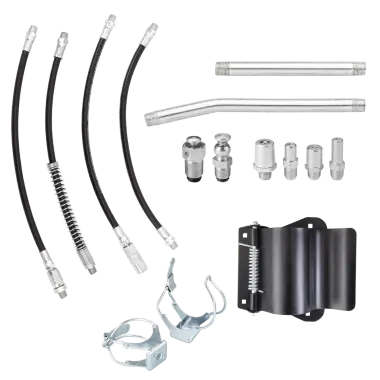
All Grease Gun Accessories
Full range available
(follower plates, seals, bulk loaders)
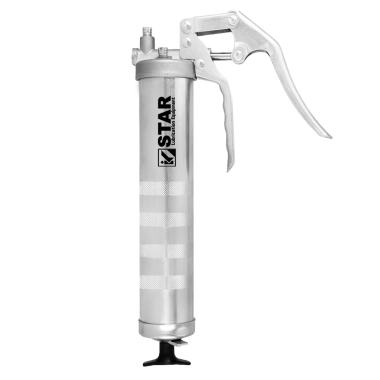
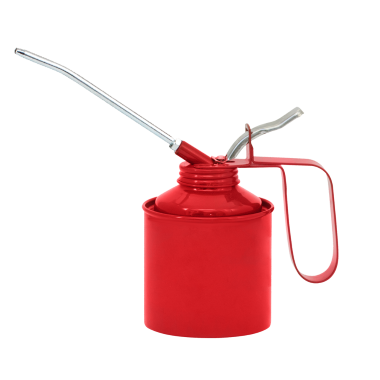
Related Product Categories

Buying Guide: When the S-711DP is the Right Choice
The S-711DP is the entry tier of the STAR dual-piston family at 500 cc, built for operators moving up from single-piston guns. It is the right pick when fitting counts are high enough to benefit from the 2.4× per-stroke output, or when cold-weather priming reliability matters. It is not the right pick for light-duty workshop service where the dual-piston output risks over-greasing.
Pick the S-711DP for high-volume service on large fitting counts
Heavy truck fleet depots, agricultural contractor routes, construction equipment maintenance, mining service teams: operations where a single shift covers 100+ grease points across multiple machines. At 2.4 g per stroke the S-711DP cuts total pumping time by roughly one third versus standard single-piston lever guns, recovering minutes per machine that compound across the shift.
Pick the S-711DP for cold-weather and sub-zero service
Northern European, Scandinavian, Canadian winters, Himalayan regions, high-altitude mining sites: environments where grease thickens in the reservoir and single-inlet guns lose prime after overnight storage. The dual grease inlet keeps the pump primed even when one feed channel has drawn air, so the first pump after reload produces grease rather than forcing a 10-stroke priming cycle before any fitting sees grease.
Step up to the S-713DP or S-712DP for larger reservoir capacity
For service routes where reload frequency matters as much as pumping speed, the S-713DP at 650 cc or S-712DP at 750 cc carry 30 percent and 50 percent more grease per fill respectively. Same dual-piston mechanism, same 12,000 PSI, same dual inlet. The S-711DP at 500 cc is the balanced pick for mixed service where portability matters alongside volume.
Consider the S-712DP/PRO for premium-tier fleet and distributor trade
The S-712DP/PRO packages the 750 cc dual-piston platform with a premium accessory kit and rubber sleeve for extended-shift grip comfort. Aimed at distributors targeting fleet buyers and agricultural contractor operations that want the upgraded accessory bundle as a visible differentiator on the tool cart.
Step up to the S-714DP for mining haul truck service
Mining haul trucks, large excavators, long conveyor systems with 40-50 fittings per machine: the S-714DP at 900 cc covers a full machine on one fill, combining dual-piston speed with extra-long-barrel capacity. The S-711DP at 500 cc typically needs two fills for machines this size.
Consider the Quadra-Cut steel Wide Barrel High Capacity for drop-heavy environments
Construction contractor yards, mining pit-side service, heavy-handed tool environments: aluminium die cast heads can crack from repeated concrete drops. The S-707 uses a forged steel head with Quadra-Cut Precision machining at the same 500 cc capacity and 12,000 PSI rating. Trade-off: heavier gun, single-piston output (1 g per stroke), no variable stroke. Pick S-711DP for pumping speed and cold-weather reliability; pick S-707 for drop tolerance and long-term yard durability.
For OEM, distributor and fleet-service trade buyers
The S-711DP is a distinctive SKU for distributors targeting fleet-service wholesalers, agricultural equipment dealers, and cold-climate service supply. The dual-piston + dual-inlet combination separates it from commodity 12,000 PSI grease guns and commands higher margins than standard single-piston 12,000 PSI guns. Contact the STAR export team for private-label packaging, regional thread variants, and mixed-container consolidation.
Frequently Asked Questions: S-711DP Dual Piston Lever Action Grease Gun
What is a dual piston lever grease gun?
A dual piston lever grease gun uses two parallel pump pistons instead of one to deliver more grease per lever stroke at the same peak pressure. On the S-711DP, each full lever stroke moves 2.4 grams of grease through the non-return valve into the coupler, approximately three times the 1 gram per stroke output of a standard single-piston lever gun. The architecture is purpose-built for operators servicing large fitting counts where total pumping time is a real productivity constraint, and for cold-weather service where the supporting dual-inlet feature prevents loss of prime on reload.
How many grams of grease does a dual piston lever grease gun deliver per stroke?
The S-711DP delivers 2.4 grams of grease per full lever stroke, or 1 oz. per 12 strokes. By comparison, standard single-piston lever guns deliver 1 gram per stroke or 1 oz. per 28 strokes. Across a 30-fitting service round at roughly 12 grams per fitting, the S-711DP pumps approximately 150 strokes versus 360 on a single-piston gun. The time difference is usually 5 to 10 minutes per heavy machine, which across a fleet-depot shift covering 5-10 machines compounds to 30-90 recovered minutes per operator.
How does a dual piston grease gun deliver 2-3x output per stroke?
Two pump pistons operate in parallel on every stroke of the lever handle, displacing roughly three times the grease volume of a single-piston pump on the same stroke. Each piston has its own bore and its own non-return valve arrangement inside the head. When the lever is pumped, both pistons move simultaneously, and both discharges combine into a single outlet flow through the coupler. Peak pressure stays at 12,000 PSI because pressure is set by the piston-area-to-lever-arm ratio, not by piston count; what doubles is the volume moved per stroke, which is what "2.4×" and "three times" refer to.
How does a dual piston grease gun prevent loss of prime in cold weather?
The dual grease inlet in the head feeds both pistons through two separate channels, so if one channel draws air during reload or cold-start, the other channel still feeds grease and the pump primes on the first stroke. Single-inlet guns lose prime when cold grease thickens and pulls away from the feed channel opening, or when the follower plate stops in a position that leaves air above the grease column. On the S-711DP, one inlet drawing air doesn't stop the pump because the second inlet is still supplying grease. Operators in northern European, Scandinavian, Canadian, and Himalayan service report the dual inlet as the single feature that most reliably eliminates the priming problem on cold mornings.
How does variable stroke work on a dual piston grease gun?
The lever-and-pump geometry is designed so that a partial swing of the handle, around 30 to 40 percent of the full arc, still builds the full 12,000 PSI pressure at the coupler. On a fixed-stroke gun, a partial lever swing builds proportionally lower pressure (so a 50 percent swing builds 6,000 PSI, not 12,000). Variable stroke overcomes that by using a mechanism that develops full pressure over whatever arc is available. The feature matters on fittings where a full lever swing is physically blocked by surrounding machine structure: excavator pin clusters behind hydraulic lines, implement linkages behind chassis members, overhead service points with low ceiling clearance.
What is the difference between 6000 PSI and 12000 PSI dual piston grease guns?
12,000 PSI is the top pressure tier for hand-operated grease guns and the pressure level that clears crusted zerk fittings on equipment that has sat outdoors between service intervals. At 6,000 PSI, fittings with dried or contaminated grease often refuse fresh grease, and the operator either skips the fitting or double-pumps it (which can blow adjacent seals). At 12,000 PSI, the gun reliably punches through the crust on the first or second stroke. For light-duty workshop service where fittings are clean and well-maintained, 6,000 PSI is adequate and the pressure margin is not needed. The S-711DP at 12,000 PSI is over-specified for bench workshop use and correctly specified for fleet, agricultural contractor, construction, and mining service where outdoor exposure between services is routine.
How do you prime a dual piston grease gun for first use?
Load the reservoir, release the plunger rod from the side slot, crack the head a quarter turn, and pump the lever 3 to 5 full strokes with the coupler disconnected. Grease should flow from the head seam by the second or third stroke because both inlet channels are drawing simultaneously. Retighten the head when grease flows without air bubbles. If priming takes more than 5 strokes on a warm reload, the follower plate may not be compressing the grease column (check the plunger rod is released), or the reservoir may be incompletely packed with air voids (redo the bulk fill, pressing grease firmly against the sidewalls). In cold weather, expect slightly more strokes because grease viscosity increases.
Can a dual piston grease gun reach tight spaces that single piston cannot?
Yes, because the variable stroke mechanism lets the operator build full 12,000 PSI pressure on partial lever swings, reaching fittings where a full lever swing is physically blocked. On a fixed-stroke single-piston gun, a tight-clearance fitting forces the operator to either move the machine structure (often impractical) or accept lower pressure from a partial swing (often inadequate for a crusted zerk). On the S-711DP, a 30 percent lever arc still produces 12,000 PSI at the coupler, so the operator can service excavator pin clusters, implement linkages, overhead service points, and other access-constrained fittings that would otherwise be skipped or double-serviced with a pistol grip gun.
Can I use a dual piston lever grease gun on a tractor?
Yes. Agricultural tractor service is one of the primary use cases for the S-711DP. A modern tractor has 25 to 40 grease points across chassis, steering linkages, PTO shafts, 3-point hitch pivots, implement couplers, and wheel bearing fittings. The S-711DP's 500 cc reservoir at 12 grams per fitting covers 40 fittings per fill (most tractors in one fill). The dual-piston output cuts total pumping time by roughly a third versus a standard gun, saving real minutes on multi-tractor contractor routes. The dual grease inlet is particularly valuable on tractors that sit in paddocks or fields between services, where single-inlet guns often need re-priming after overnight exposure.
Is a dual piston grease gun better for 1000+ grease fittings?
For routes where a single operator greases many fittings per shift, yes. A dual-piston gun covers the same route in about a third of the pumping time, which on 1,000 fittings is the difference between one shift and almost two. At 12 grams per fitting and 1 gram per stroke on a standard gun, 1,000 fittings take 12,000 strokes. On the S-711DP at 2.4 grams per stroke, the same 1,000 fittings take 5,000 strokes. The operator still needs to move between fittings, connect and disconnect the coupler, and handle reloads, so the total time saving is less than the stroke-count saving, but it is typically 25-35 percent. For high-volume routes this is the difference between covering the route on schedule and falling behind.
How do I fix air lock in a dual piston grease gun?
Crack the head a quarter turn to open the air release path, then pump the lever 3 to 5 strokes with the coupler disconnected. Retighten the head when grease flows from the seam without bubbles. Air lock on the S-711DP is less common than on single-inlet guns because the dual inlet feeds both pistons through separate channels, so one channel drawing air rarely stops the pump. If priming still fails after 5 strokes: check that the plunger rod is released from the side-slot lock (the follower spring needs to compress the grease column against the head); inspect the bulk fill for air voids at the sidewalls (redo the fill if needed); and in cold weather, give the grease time to warm to operating temperature before priming.
Can I mix different grease types in a dual piston grease gun?
No. Mixing grease chemistries (lithium, calcium, aluminium complex, polyurea, clay) can cause chemical reactions that form hard deposits and clog the pump, the dual inlet channels, and the non-return valve. Symptoms of incompatible mixing: grease goes lumpy or crumbly, pumping becomes erratic, the gun loses prime frequently, and the grease loses water resistance and heat stability. Workshops running multiple grease types should keep dedicated labelled guns per grease chemistry. To safely switch grease types in the S-711DP: empty the reservoir, unscrew the head and barrel, wipe out old grease with a lint-free rag, solvent-flush the head and barrel with mineral spirits, dry completely, lightly re-grease the plunger rod seal with a compatible grease, and reload with the new grease.
How often should you clean a dual piston grease gun?
Every 3 months for continuous professional use, every 6 months for regular workshop use, or annually for occasional service. Deep-clean procedure: depressurise the gun by retracting the plunger rod and pressing the bleeder valve, empty the reservoir, unscrew the head and barrel, wipe the barrel interior with solvent-dampened lint-free rag, solvent-clean the dual inlet channels and non-return valve (a small brush helps reach the inlet paths), inspect the follower plate seal and plunger rod seal for circumferential wear, reassemble with fresh grease lightly applied to seals. Replace worn seals from the STAR spare parts kit. The dual-inlet architecture accumulates slightly more debris than single-inlet guns because there are two flow paths to keep clean; scheduled cleaning prevents the build-up from affecting priming reliability.
Should I store a dual piston grease gun horizontally or vertically?
Horizontally, with the plunger rod disengaged from the side-slot lock. Oil bleed (base oil separating from grease thickener) happens faster in vertical storage because gravity pulls oil toward the bottom of the reservoir. Horizontal storage minimises the bleed. Releasing the plunger rod lets the follower spring keep the grease column compressed against the pump chamber, which reduces air exposure inside the reservoir. For storage over 30 days: drain the reservoir completely, solvent-clean, and store dry with the plunger seal lightly greased. Never leave the gun in open utility-vehicle beds or outdoor tool-boxes overnight where temperature cycling accelerates oil separation.
What PPE should you wear when using a 12,000 PSI dual piston grease gun?
Mandatory PPE at 12,000 PSI (830 bar): wraparound safety glasses, nitrile chemical-resistant gloves, closed-toe steel-capped boots, long-sleeve protective clothing. Safety rules: never point the coupler or flex hose at any body part, keep the lever hand behind the coupler head, inspect the 12" flex hose before each use for cracks, bulges, or stiffness, never test grease flow by pressing the coupler against skin or fabric. At 12,000 PSI a pinhole in the hose or an unseated coupler can drive grease through intact skin. Grease injection injuries require immediate surgical treatment regardless of initial wound appearance; untreated injection injuries can progress to tissue necrosis and amputation. Any suspected injection injury is a surgical emergency, not a minor wound.
What is the difference between a dual piston and single piston lever grease gun?
A dual piston gun moves roughly three times the grease per stroke, has the dual-inlet prime reliability feature, and typically supports variable stroke; a single piston gun is lighter, mechanically simpler, and typically sits at an entry price point. For high-volume service (fleet routes, agricultural contractor work, large equipment maintenance), the dual-piston output recovers enough pumping time to justify the weight and mechanical-complexity premium. For single-bay workshop service, occasional grease jobs, or service work where overgreasing would damage small bearings, a standard single-piston gun like the S-707 is correctly sized and simpler to maintain. The decision comes down to fitting count per shift: below 50 fittings per shift, single-piston is right; above 200 fittings per shift, dual-piston pays back quickly.
Why Global Buyers Trust STAR
We at STAR have manufactured lever action grease guns in our ISO 9001:2015 certified workshop since 1980. The S-711DP ships with full export documentation and multilingual manuals, and is a distinctive SKU for distributors targeting fleet service, agricultural contractor, and cold-weather supply trade channels.