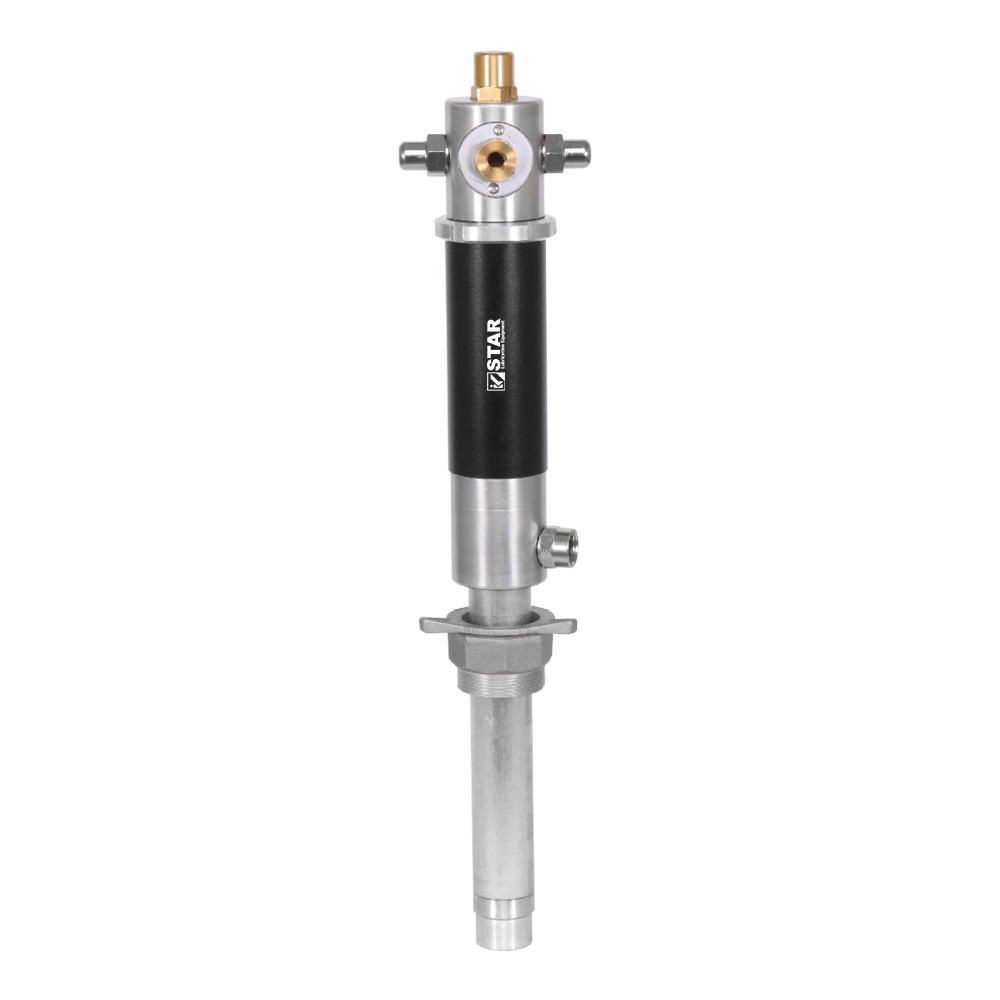

Pneumatic Air Operated Oil Pumps
The STAR S-300-O-PN Pneumatic Air Operated Oil Pump is a 5:1 ratio air operated oil transfer pump engineered for workshop, fleet and industrial oil dispensing. Compressed air drives a double-acting reciprocating piston, delivering oil at five times the inlet air pressure without electricity or spark hazard.
The 2-1/2" (63 mm) air motor powers a hardened alloy steel piston mechanism that handles engine oil, gear oil, hydraulic fluid, ATF and transmission fluid up to SAE 240 viscosity. All-metal construction with wear-resistant internals ensures reliable service in demanding environments.
Flow rates reach 18 LPM (4.76 GPM) with a working pressure range of 30-150 PSI (2-10 bar), transferring oil up to 50 metres from drum to dispensing point. BSP threaded connections provide international compatibility.
Available in three configurations: stub pump for tanks and containers, pump with suction tube for 50-60 litre (16 gal.) drums, and pump with suction tube for 205 litre (55 gal.) drums. Ideal for automotive workshops, fleet maintenance depots, manufacturing plants and service stations.
Rugged Build Quality
- Double-acting piston mechanism: delivers oil on both the up-stroke and down-stroke for continuous, pulse-free flow at up to 18 LPM.
- 5:1 pressure ratio: multiplies air inlet pressure by five, generating up to 750 PSI (52 bar) fluid output from 150 PSI air supply.
- All-metal construction: hardened alloy steel internals resist wear from abrasive particles in used motor oil and gear lubricants.
- 2-1/2" (63 mm) air motor: oversized reciprocating piston provides consistent power for high-viscosity fluids in cold workshop conditions.
- BSP threaded connections: 1/4" air inlet, 1/2" pump outlet and 1" stub inlet for universal compatibility with international fittings.
- Spark-free operation: compressed air power eliminates electrical ignition risk, making the pump safe for flammable fluid environments.
- Self-priming design: the double-acting piston creates suction on the down-stroke, drawing oil without manual priming.
- 81 dB noise level: quieter than comparable pneumatic pumps, reducing operator fatigue during extended dispensing sessions.
- SAE 240 viscosity rating: handles everything from thin engine oils to heavy gear lubricants without stalling or cavitation.
- 50-metre transfer distance: long-distance oil delivery from drum storage to remote dispensing points without pressure loss.
Features / Operating Principle
The S-300-O-PN uses compressed air to drive a reciprocating piston that transfers oil from drums, tanks or containers to dispensing points. No electricity required; no spark hazard in flammable environments.
Direct mount on tanks and containers via 1" BSP inlet
With suction tube for 16 gal. drums
With suction tube for 55 gal. drums
Mobile kit with drum trolley for workshop flexibility
How the S-300-O-PN Works
Understanding the pneumatic oil pump's operating cycle helps you optimise air pressure settings and flow rate for your specific oil viscosity and transfer distance.
- Connect: Attach the pump to your oil drum (50-60L or 205L) using the appropriate suction tube, or mount the stub pump directly onto a tank via the 1" BSP inlet. Connect a clean, dry compressed air supply to the 1/4" BSP air inlet. Set the air regulator between 30 and 150 PSI depending on required flow rate and oil viscosity.
- Transfer: Open the air supply valve. The 2-1/2" (63 mm) air motor drives the piston downward, pushing oil through the 1/2" outlet. On the return stroke, the double-acting mechanism draws fresh oil from the drum while simultaneously delivering oil at the outlet. This continuous cycle produces pulse-free flow at up to 18 LPM.
- Dispense: Oil flows through the delivery hose to the dispensing point, whether a control gun with digital meter, a non-drip nozzle, or a direct fill connection. The 5:1 ratio means 100 PSI air input produces 500 PSI fluid pressure at the nozzle, sufficient to push oil through long hose runs up to 50 metres. Reduce air pressure for slower, more controlled dispensing.
The pump requires no electricity, produces no sparks, and self-primes on startup. For cold-weather operation with high-viscosity gear oils, increase air pressure toward 150 PSI and allow the oil to warm slightly before pumping to prevent cavitation.
| Specification | Value |
|---|---|
| Model Series | S-300-O-PN |
| Type | Pneumatic Air Operated Oil Ratio Pump |
| Mechanism | Double-Acting Reciprocating Piston |
| Pressure Ratio | 5:1 |
| Flow Rate | Up to 18 LPM (4.76 GPM) |
| Working Pressure | 30-150 PSI (2-10 bar) |
| Max Air Pressure | 150 PSI (10 bar) |
| Max Fluid Pressure | 750 PSI (52 bar) |
| Air Motor Diameter | 2-1/2" (63 mm) |
| Air Inlet Connection | 1/4" BSP (F) |
| Pump Outlet Connection | 1/2" BSP (F) |
| Pump Inlet (Stub Pump) | 1" BSP (F) |
| Thread Standard | BSP |
| Viscosity Range | Low to medium viscosity oils, up to SAE 240 |
| Compatible Fluids | Engine oil, gear oil, hydraulic fluid, ATF, transmission fluid, differential fluid |
| Transfer Distance | Up to 50 metres |
| Drum Compatibility | 50-60 litre (16 gal.) and 205 litre (55 gal.) |
| Noise Level | 81 dB |
| Construction | All-metal, hardened wear-resistant alloy steel parts |
| Certification | CE |
| Country of Origin | India |
| HS Code | 8413 |
| Warranty | 1 year against manufacturing defects |
| OEM / Private Label | Available (MOQ applies) |
The S-300-O-PN series is available in three configurations to match your drum size and installation requirements.
| Configuration | Description | Drum Size |
|---|---|---|
| Stub Pump Only | Pump unit with 1" BSP inlet for direct mounting on tanks, containers or custom installations | Any (user supplies suction tube) |
| Pump + Suction Tube (Short) | Complete kit with suction tube sized for small drums | 50-60 litre (16 gal.) |
| Pump + Suction Tube (Long) | Complete kit with suction tube sized for standard industrial drums | 205 litre (55 gal.) |
All configurations share the same pump head, air motor and specifications. The suction tube length is the only difference between kits. Trolley-mounted and wall-mounted options available on request for complete dispensing station setups.
Contact us for custom kit configurations including hose reels, digital meter guns and drum trolleys.
Understanding the S-300-O-PN's engineering helps you select the right air pressure and accessories for your specific oil transfer application.
The S-300-O-PN serves any operation that transfers oil from bulk storage to machinery, vehicles or smaller containers. Its spark-free pneumatic drive and SAE 240 viscosity rating make it versatile across industries.
Related Pneumatic Equipment
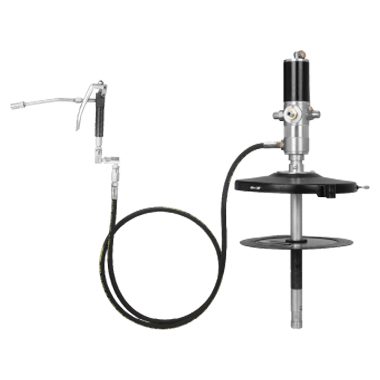
Pneumatic Grease Dispenser Assembly
Complete air operated greasing systems
View Details →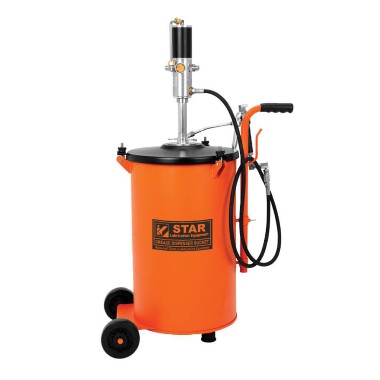
Pneumatic Grease Dispenser Buckets
Air powered bucket dispensers
View Details →
Bare Pumps for Pneumatic Dispensers
Replacement pump units
View Details →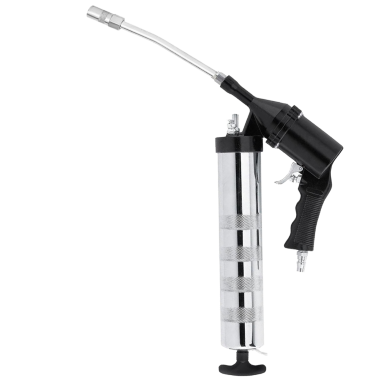
S-700-PN Air Operated Grease Gun
Pneumatic grease gun 500 cc
View Details →Related Product Categories
Buying Guide: When to Choose the S-300-O-PN
Selecting the right oil transfer pump depends on your fluid type, transfer volume, distance and workshop environment. Here is how the S-300-O-PN compares to alternatives:
Pneumatic vs Electric Oil Pumps
Electric oil pumps require mains power or battery charging, produce sparks at motor brushes, and need explosion-proof certification for use near flammable vapours. The S-300-O-PN runs entirely on compressed air, which most workshops already have plumbed. No electrical hazard, no battery degradation, no charger to maintain. Choose pneumatic when your workshop has compressed air available and you handle any flammable fluids. Choose electric when compressed air is unavailable or when you need portable operation at remote sites without an air compressor.
5:1 Ratio vs 3:1 Ratio Pumps
A 3:1 ratio pump delivers higher flow at lower pressure, suited for thin engine oils over short distances. The 5:1 ratio on the S-300-O-PN provides higher fluid pressure (up to 750 PSI) for pushing heavy gear oils through long hose runs. Choose 5:1 when you transfer SAE 90 or heavier gear oils, need to push oil more than 10 metres, or dispense through a digital meter gun that requires consistent back-pressure. Choose 3:1 for high-volume engine oil dispensing over short distances where maximum flow rate matters more than pressure.
Pneumatic Piston vs Diaphragm Pumps
Air operated double diaphragm (AODD) pumps handle solids-laden fluids and can run dry without damage, but they produce pulsating flow and lower pressure. The S-300-O-PN's piston mechanism delivers smooth, continuous flow at higher pressure, making it better for clean oil transfer with meter guns. Choose piston pumps for clean lubricant dispensing where flow accuracy matters. Choose diaphragm pumps for waste oil with particulates, chemical transfer, or applications where the pump may run dry.
Pneumatic vs Manual Hand Pumps
Manual barrel pumps cost less and need no air supply, but they require physical effort and deliver 2-4 LPM at most. The S-300-O-PN delivers 18 LPM hands-free once connected, making it 4-5 times faster for bulk oil changes. For workshops doing more than 5 oil changes per day, the pneumatic pump pays for itself in labour time savings within weeks.
OEM and Bulk Buyers
We at STAR manufacture the S-300-O-PN series with full OEM and private label options. Custom branding, modified specifications, kit configurations with hose reels and digital meter guns, and MOQ-friendly bulk pricing are available for distributors and importers. Contact our export team for partnership details.
Frequently Asked Questions: Pneumatic Air Operated Oil Pumps
What is a pneumatic air operated oil pump?
A pneumatic air operated oil pump uses compressed air to drive a reciprocating piston that transfers oil from drums, tanks or containers to dispensing points without electricity. The STAR S-300-O-PN is a 5:1 ratio double-acting piston pump that delivers up to 18 LPM (4.76 GPM) of oil at pressures up to 750 PSI fluid output. It handles engine oil, gear oil, hydraulic fluid, ATF and transmission fluid up to SAE 240 viscosity. Because it runs on compressed air alone, it produces no sparks and is inherently safe for use near flammable liquids.
What does 5:1 ratio mean on a pneumatic oil pump?
The 5:1 ratio means the pump multiplies the air inlet pressure by five at the fluid outlet. If you supply 100 PSI of compressed air, the pump delivers 500 PSI of fluid pressure. At maximum 150 PSI air input, the S-300-O-PN produces up to 750 PSI fluid pressure. This ratio is the industry standard for oil transfer because it balances flow rate (18 LPM) against pressure (enough to push oil through 50-metre hose runs and digital meter guns). Lower ratios like 3:1 deliver more volume at less pressure; higher ratios like 50:1 are used for grease, not oil.
What is the maximum flow rate of the S-300-O-PN air operated oil pump?
The S-300-O-PN delivers up to 18 LPM (4.76 GPM) at maximum air pressure of 150 PSI. Actual flow rate depends on oil viscosity, hose length and air pressure setting. Thin engine oils (SAE 10W-40) flow near maximum rate at 80-100 PSI air input. Heavy gear oils (SAE 140-240) require higher air pressure and deliver lower flow rates due to increased fluid resistance. For a typical 205-litre drum of engine oil, the pump can empty the drum in approximately 11-12 minutes at full flow.
Can I use a pneumatic oil pump for gear oil up to SAE 240?
Yes, the S-300-O-PN handles fluids from thin engine oils through to heavy gear oils rated SAE 240. The oversized 2-1/2" (63 mm) air motor and hardened piston generate sufficient suction to draw thick gear oil from drums even in cool workshop conditions. For SAE 140 and above, set air pressure toward 120-150 PSI and allow the oil to reach ambient workshop temperature before pumping. In very cold environments (below 5 degrees Celsius), SAE 240 gear oil may require warming to prevent cavitation at the suction tube inlet.
How do I prime the air operated oil pump for the first time?
The S-300-O-PN is self-priming: connect the suction tube to the drum, connect the air supply, and open the air valve slowly. The double-acting piston creates suction on its first stroke, drawing oil into the pump chamber without manual priming. For initial startup, open the air valve gradually (start at 30-40 PSI) and allow the pump to cycle slowly until oil appears at the outlet. Once oil flows, increase air pressure to your desired operating level. If the pump fails to prime, check that the suction tube is fully submerged and that all connections are airtight.
Can I use a pneumatic oil pump for ATF and transmission fluid?
Yes, automatic transmission fluid (ATF) and manual transmission fluid are well within the S-300-O-PN's viscosity range. ATF is typically SAE 5W-30 equivalent viscosity, which flows easily through the pump at low air pressures of 30-60 PSI. The pump's BSP connections and all-metal construction are fully compatible with ATF chemistry. Use a dedicated suction tube and hose for ATF to prevent cross-contamination with engine oil or gear oil. Many quick-lube shops and transmission specialists use pneumatic pumps for clean, metered ATF dispensing.
Is a pneumatic oil pump safe for use near flammable liquids?
Yes, pneumatic oil pumps are inherently spark-free because they contain no electrical components in the fluid-handling zone. The S-300-O-PN uses compressed air as its sole power source, eliminating motor windings, switches, relays and wiring that could arc near flammable vapours. This makes it suitable for workshops that handle diesel, kerosene-cut flushing oils, and environments where oil vapour concentrations may be present. Unlike electric pumps that require expensive explosion-proof certification, pneumatic pumps achieve intrinsic safety through their operating principle.
What size air compressor do I need for the pneumatic oil pump?
The S-300-O-PN requires a compressor capable of delivering sustained airflow at 80-150 PSI through a 1/4" BSP connection. A compressor rated at 5-7 CFM (140-200 LPM) free air delivery at 100 PSI is sufficient for continuous operation. Most workshop compressors rated 2 HP or above meet this requirement. The pump's air consumption varies with cycling speed and oil viscosity; thicker oils cause slower cycling and lower air consumption. Install an air filter-regulator-lubricator (FRL) unit between the compressor and pump to remove moisture and set consistent operating pressure.
How does a pneumatic oil pump compare to an electric pump for oil transfer?
Pneumatic pumps offer spark-free safety, simpler maintenance (no motor brushes, no batteries) and unlimited run time from a compressed air supply. Electric pumps offer portability without air lines and work at remote sites without compressors. The S-300-O-PN's 18 LPM flow rate matches or exceeds most 12V electric transfer pumps. Pneumatic pumps last longer in dusty, wet workshop environments because sealed air motors tolerate contamination better than electric motor bearings. Choose pneumatic when compressed air is available; choose electric only when it is not.
Why is my pneumatic oil pump not pumping?
The most common causes are insufficient air pressure, air leaks in connections, a clogged suction filter, or worn piston seals. First, verify air pressure at the pump inlet reads at least 60 PSI on a gauge (pressure drops in long air lines). Check all BSP connections for air leaks using soapy water. Inspect the suction tube for blockage or cracks that allow air ingress. If the pump cycles but delivers no oil, the piston seals may be worn and need replacement. If the pump does not cycle at all, the air valve may be stuck; clean the air inlet filter and check for moisture contamination in the air supply.
How often should I service my pneumatic oil pump?
Service the S-300-O-PN every 6 months for light use (under 20 hours per month) or every 3 months for heavy daily use in fleet workshops. Service includes cleaning the air inlet filter, draining moisture from the air supply line, inspecting piston seals for wear, checking all BSP connections for tightness, and lubricating the air motor with 2-3 drops of pneumatic tool oil. Replace piston seals annually or when flow rate drops noticeably. The all-metal construction and hardened internals mean the pump body itself rarely needs attention beyond seal replacement.
Can I use a pneumatic oil pump for waste oil collection?
Yes, the S-300-O-PN can transfer used motor oil, waste hydraulic fluid and other spent lubricants from collection sumps to storage drums. Waste oil typically contains fine metal particles and combustion residues; the hardened alloy steel piston and cylinder resist abrasive wear from these contaminants better than plastic or aluminium pump bodies. Install a coarse inlet strainer on the suction tube to catch large debris. After pumping waste oil, flush the pump with clean oil before switching to fresh lubricant dispensing to prevent cross-contamination.
How do I store my air operated oil pump when not in use?
Disconnect the air supply, relieve any residual pressure by cycling the pump once, and leave the suction tube in the drum or cap all open ports. For storage beyond one month, flush the pump with clean light oil to prevent residual heavy oil from hardening inside the cylinder. Store in a dry area between 5 and 35 degrees Celsius. Cap the air inlet to prevent dust and moisture ingress. Before restarting after extended storage, add 2-3 drops of pneumatic tool oil to the air inlet and cycle slowly at low pressure to re-lubricate the air motor seals.
What safety precautions should I take when using a pneumatic oil pump?
Wear safety glasses and oil-resistant gloves, ensure adequate ventilation, and never direct the discharge nozzle at people. Although the S-300-O-PN is spark-free, oil mist and vapour can still be hazardous in enclosed spaces. Always lock out the air supply before performing maintenance or disconnecting hoses. Check hose condition before each use; a burst hose at 750 PSI fluid pressure can cause injection injuries similar to high-pressure grease gun injuries. Keep the work area clean of spilled oil to prevent slips. Follow your facility's hot-work permit procedures if welding or grinding near the pump.
Why Global Buyers Trust STAR
We at STAR have been manufacturing pneumatic lubrication equipment in our ISO 9001:2015 certified Ludhiana facility since 1980. Our products are shipped internationally across Europe, Asia, Africa and the Americas with full export documentation and dedicated OEM support.