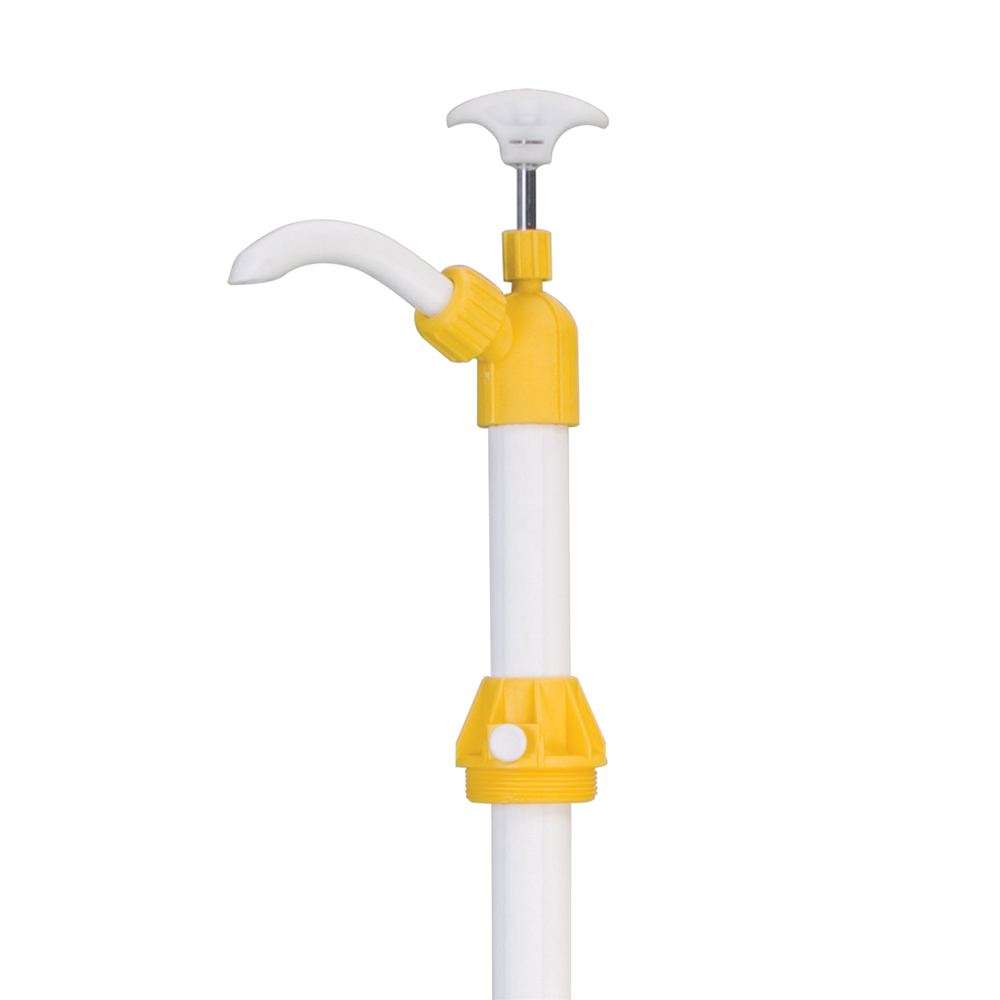

S-CLP Lift Action Chemical Pump
The STAR S-CLP Lift Action Chemical Pump is a self-priming vertical action drum pump designed for safe, spill-free transfer of chemicals from 25 litre containers.
A nylon body houses a stainless steel plunger rod with PTFE seal, providing broad chemical resistance against solvents, mild acids, petroleum-based fluids and water-based solutions without corrosion or seal degradation.
Each push-pull stroke delivers 190 ml (6.3 oz.) of liquid. The pump handles lacquer, thinners, acetone, antifreeze, brake cleaner, DEF, urea, detergents, glycerine and mild acids.
Workshops, chemical stores, automotive service bays and cleaning supply operations use the S-CLP to eliminate unsafe drum tipping and reduce chemical exposure during transfer. We at STAR manufacture this pump for distributors and OEM partners worldwide.
Rugged Build Quality
- Nylon body: lightweight, chemical-resistant construction that withstands solvents, mild acids and petroleum-based media without degradation.
- Stainless steel plunger rod: corrosion-resistant 304 grade steel ensures long service life in aggressive chemical environments.
- PTFE piston seal: universal chemical compatibility across the full recommended fluid range, from acetone to mild hydrochloric acid.
- 2" threaded polypropylene bung adaptor: fits standard 25 litre drum openings with a secure, leak-free thread seal.
- Nylon suction tube: chemical-resistant tube reaches the bottom of 25 litre containers without contaminating the fluid.
- Self-priming piston design: eliminates the need to manually prime with hazardous chemicals; the pump draws fluid on the first stroke.
- Push-pull vertical action: simple two-hand operation requires no electricity, compressed air or batteries.
How the S-CLP Works
The S-CLP uses a vertical piston mechanism to draw liquid from the drum and discharge it through the spout. No electricity or compressed air required:
- Install: Thread the 2" polypropylene bung adaptor into the drum opening by hand. The adaptor seats securely against the drum lip with no tools required. The nylon suction tube extends to the bottom of the 25 litre container.
- Draw: Push the handle downward. The PTFE-sealed piston creates suction that draws liquid up through the nylon suction tube and into the pump chamber. The self-priming design means the pump begins transferring fluid from the very first stroke.
- Dispense: Pull the handle upward. The piston forces 190 ml (6.3 oz.) of liquid out through the discharge spout into your receiving container. Repeat the push-pull cycle for continuous transfer until the drum is empty or the desired volume is dispensed.
A full 25 litre drum empties in approximately 132 strokes. The vertical action keeps the operator upright and away from chemical splashes, which is significantly safer than tipping or siphoning.
| Specification | Value |
|---|---|
| Model | S-CLP |
| Type | Lift Action Chemical Pump (Vertical Action) |
| Mechanism | Push-Pull Piston (Self-Priming) |
| Flow Rate | 190 ml (6.3 oz.) per stroke |
| For Use On | 25 litre drums / 5 gallon pails |
| Body Material | Nylon (chemical resistant) |
| Plunger Rod | Stainless Steel |
| Piston Seal | PTFE |
| Bung Adaptor | 2" threaded Polypropylene (PP) |
| Suction Tube | Nylon |
| Wetted Components | Nylon, Stainless Steel, PTFE |
| Self-Priming | Yes |
| Recommended Fluids | Lacquer, Thinners, Acetone, Antifreeze, Brake Kleen, Detergents, Glycerine, Water, Weed Killer, Mild Acids, Urea, DEF, Petroleum Based Media |
| NOT Recommended For | Strong acids (sulphuric, nitric), bleach, gasoline, concentrated caustics |
| Country of Origin | India |
| Certifications | ISO 9001:2015 |
| OEM / Private Label | Available (MOQ applies) |
Each S-CLP ships complete and ready to install on any standard 25 litre drum with a 2" bung opening.
Stainless Steel Plunger Rod
PTFE Piston Seal
2" PP Bung Adaptor
Nylon Suction Tube
Discharge Spout
Suction Tube
Bung Adaptor
Plunger Rod Assembly
Every unit is fully customisable for OEM buyers. Custom colour coding, branding, packaging and modified tube lengths available on request.
Contact us for custom configurations.
Understanding the S-CLP's construction and output helps you select the right pump for your chemical handling environment:
The S-CLP is designed for safe chemical transfer from 25 litre drums across a wide range of industries and applications:
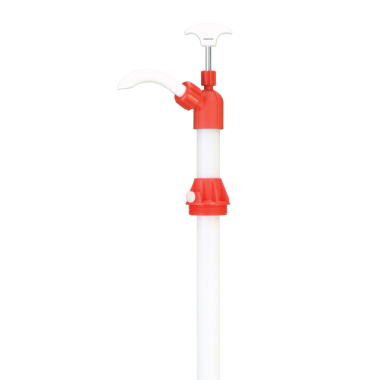
S-CLP Variants
Related Product Categories
Buying Guide: When to Choose the S-CLP
Selecting the right drum pump depends on your container size, the chemicals you handle, and your transfer volume requirements.
S-CLP vs S-CLP/XL
Both pumps share identical construction (nylon body, stainless steel plunger, PTFE seal, PP bung adaptor). The difference is drum size and output. The S-CLP fits 25 litre containers with 190 ml per stroke output. The S-CLP/XL fits 205 litre (55 gallon) drums with 400 ml per stroke output and a longer suction tube. Choose the S-CLP for workshop bench-top containers, cleaning supply drums and small-volume chemical stores. Choose the S-CLP/XL for full-size industrial drums in warehouses and production facilities.
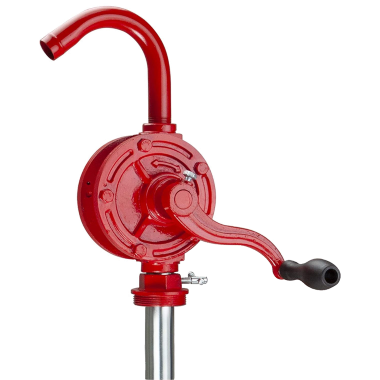
S-CLP vs Rotary Barrel Pump
A rotary barrel pump uses a hand-crank mechanism and is designed primarily for oils, fuels and non-corrosive fluids. Rotary pumps typically have cast iron or aluminium bodies that corrode when exposed to solvents, acids or water-based chemicals. The S-CLP's nylon and PTFE construction handles the full range of chemical media that would destroy a metal rotary pump. Choose rotary for oils and fuels; choose the S-CLP for chemicals, solvents and corrosive media.
S-CLP vs Lever Barrel Pump
Lever barrel pumps offer higher flow rates but are built with metal components (aluminium heads, brass piston rings) that react with aggressive chemicals. The S-CLP's all-plastic wetted path (nylon, PP, PTFE) ensures zero metal contact with the fluid. For acetone, thinners, mild acids and DEF, the S-CLP is the safer choice. Lever barrel pumps suit non-corrosive oils, antifreeze and diesel where metal contact is acceptable.
OEM and Bulk Buyers
We at STAR manufacture the S-CLP for distributors, importers and OEM partners. Custom colour coding (for chemical segregation systems), private label branding, modified tube lengths and bulk packaging are available. Contact our export team for partnership details and MOQ-friendly pricing.
Frequently Asked Questions: S-CLP Lift Action Chemical Pump
What is a lift action drum pump?
A lift action drum pump is a manual vertical-action piston pump that transfers liquid from drums and containers using a simple push-pull handle motion. The S-CLP uses this mechanism with a nylon body, stainless steel plunger rod and PTFE seal to safely transfer chemicals from 25 litre drums. Unlike rotary or lever barrel pumps that use metal components, the lift action design keeps all wetted parts in chemical-resistant materials. The vertical piston creates suction on the downstroke and discharges fluid on the upstroke, delivering 190 ml per cycle.
How much liquid does the S-CLP dispense per stroke?
The S-CLP delivers 190 ml (6.3 oz.) of liquid per stroke. This means a full 25 litre drum empties in approximately 132 strokes. The output rate is consistent regardless of fluid viscosity (within the recommended range) because the PTFE-sealed piston maintains a tight seal throughout its travel. For comparison, some competing 25 litre drum pumps deliver only 100-150 ml per stroke, requiring significantly more effort to transfer the same volume.
How does the S-CLP lift action pump work?
The S-CLP works by creating alternating vacuum and pressure inside a sealed cylinder using a PTFE-sealed piston on a stainless steel rod. Pushing the handle down draws liquid up through the nylon suction tube into the pump chamber. Pulling the handle up forces that liquid out through the discharge spout. The pump is self-priming, meaning it begins transferring fluid from the first stroke without any manual filling of the suction tube. No electricity, compressed air or batteries are needed.
What chemicals can I transfer with the S-CLP?
The S-CLP handles a wide range of chemicals including lacquer, thinners, acetone, antifreeze, brake cleaner, detergents, glycerine, water, weed killer, mild acids, urea, DEF and petroleum-based media. The nylon body, stainless steel plunger and PTFE seal provide resistance to most solvents, mild acids (below pH 2) and water-based solutions. Fluids NOT recommended include strong mineral acids (concentrated sulphuric, nitric), bleach (sodium hypochlorite), gasoline and concentrated caustic solutions, which can degrade nylon over time.
Is the S-CLP self-priming?
Yes, the S-CLP is fully self-priming. The PTFE-sealed piston creates sufficient vacuum on the first downstroke to draw liquid up through the suction tube without any manual priming. This is a critical safety feature for chemical handling: operators never need to mouth-siphon or hand-fill the tube with hazardous fluids. Simply install the pump on the drum and begin pumping immediately.
Can I use the S-CLP for DEF and urea from a 25 litre container?
The S-CLP is well-suited for dispensing DEF (diesel exhaust fluid) and urea solutions from 25 litre containers. DEF is a water-based urea solution that corrodes metal pump components over time through crystallisation. The S-CLP's nylon body and PTFE seal are immune to urea crystallisation and water-based corrosion. Many automotive workshops and fleet depots use 25 litre DEF containers as their standard supply format, making the S-CLP the correct pump for this application.
Can I use the S-CLP for petroleum-based fluids?
Yes, the S-CLP handles petroleum-based media including light oils, hydraulic fluid and petroleum solvents. The PTFE seal and nylon body resist petroleum derivatives without swelling or degradation. However, for transferring gasoline or highly volatile petroleum spirits, a pump with a flame arrestor is recommended for safety compliance. The S-CLP does not include a flame arrestor, so it suits petroleum-based solvents and oils but not raw fuel transfer in environments requiring explosion-proof equipment.
What size drums does the S-CLP fit?
The S-CLP is designed specifically for 25 litre drums and 5 gallon pails with a standard 2" (51 mm) bung opening. The nylon suction tube length is matched to reach the bottom of a 25 litre container. For larger 205 litre (55 gallon) drums, use the S-CLP/XL, which has a longer suction tube and higher 400 ml per stroke output suited to the larger volume.
How do I fix air lock in the S-CLP?
Air lock occurs when air enters the pump chamber and prevents the piston from creating suction. To fix: ensure the suction tube is fully submerged in liquid (not drawing air from above the fluid level). Check that the bung adaptor is threaded tightly with no air gaps. Pump the handle rapidly 5-10 times to purge trapped air through the discharge spout. If air lock persists, remove the pump, inspect the PTFE seal for wear or damage, and confirm the suction tube has no cracks that allow air ingress.
Why is my drum pump leaking from the seal?
Seal leakage typically indicates a worn PTFE piston seal or chemical damage to the seal surface. Over thousands of cycles, the PTFE seal wears against the cylinder wall and loses its tight fit. Aggressive chemicals outside the recommended range (strong acids, bleach) can also degrade the seal prematurely. Replace the PTFE seal kit when leakage begins. Spare seal kits are available from STAR. Also check that the plunger rod is straight and undamaged, as a bent rod causes uneven seal wear.
Can I use the same pump for different chemicals?
You can use one S-CLP for multiple compatible chemicals, but thorough cleaning between different fluid types is essential. Residual chemical A mixing with chemical B can cause reactions, contamination or hazardous fumes. For incompatible chemicals (acids after solvents, petroleum after water-based), flush the pump with clean water or appropriate solvent, then dry before switching. Many workshops colour-code their pumps (one per chemical type) to prevent cross-contamination entirely.
How do I clean the S-CLP between chemicals?
Flush the pump by placing the suction tube in a container of clean water or appropriate cleaning solvent, then pump 10-15 strokes to purge residual chemical from the chamber and tube. For sticky residues (lacquer, glycerine), use warm water or the appropriate solvent for that chemical. Disassemble the pump periodically to inspect and wipe the piston seal, plunger rod and suction tube interior. Allow all components to dry before reassembly if switching to a water-sensitive chemical.
How do I store a lift action pump when not in use?
Remove the pump from the drum, flush with clean water, dry all components and store in a clean, dry location away from direct sunlight. UV exposure can degrade nylon over extended periods. If storing with residual chemical inside (for pumps dedicated to one fluid), ensure the bung adaptor is capped to prevent evaporation and vapour release. Store vertically with the discharge spout pointing up to prevent residual dripping. Replace the PTFE seal if the pump has been idle for more than 12 months before returning to service.
Is a lift action pump safer than pouring from a drum?
Significantly safer. Tipping a 25 litre drum (which weighs 20-30 kg when full) risks splashing, spilling, back strain and uncontrolled flow. A lift action pump keeps the drum upright and stable, delivers measured volumes per stroke, keeps the operator's hands away from the chemical, and eliminates splash-back. For hazardous chemicals (solvents, acids, pesticides), pump transfer is a workplace safety requirement in most jurisdictions. The S-CLP's self-priming design adds another safety layer by eliminating manual priming contact with the fluid.
Why Global Buyers Trust STAR
We at STAR have been manufacturing fluid transfer equipment in our ISO 9001:2015 certified facility since 1980. Our lift action pumps are shipped internationally with full export documentation and dedicated OEM support for distributors and brand owners.